2026 Top Universal Motors Types for Global Buyers?

Time:2026-10-12 Author:Liam
0%

In 2026, global buyers face a crowded market for Universal Motors. These compact motors power vacuum cleaners, mixers, drills, hair dryers, and other demanding appliances. Their high speed and strong starting torque remain valuable where size and performance matter. However, choosing the correct motor requires more than comparing wattage or purchase price.

This guide examines the main Universal Motors types available to international buyers. It considers brushed construction, laminated stators, compensated designs, cooling methods, and application-specific variations. Each design affects noise, vibration, carbon brush life, efficiency, and maintenance requirements. A motor that performs well in a kitchen mixer may fail quickly inside a dusty workshop tool. Small details matter. Look closely.

Practical evaluation should include rated voltage, frequency, speed range, insulation class, duty cycle, thermal protection, and shaft configuration. Buyers should also request test reports, traceable specifications, production samples, and evidence of quality-control procedures. Relevant safety requirements may differ across regions, including IEC, UL, CE, and other national frameworks. Certification marks alone do not prove suitability for every installation.

The market is not perfectly tidy. Some listings use “universal” loosely, while others hide brush wear or overheating risks. This guide therefore compares performance claims with real operating conditions. It cannot replace laboratory testing or qualified engineering review. Still, it offers a reliable starting point for procurement teams, appliance manufacturers, distributors, and technical buyers seeking safer, longer-lasting motor choices worldwide. Recheck every assumption.
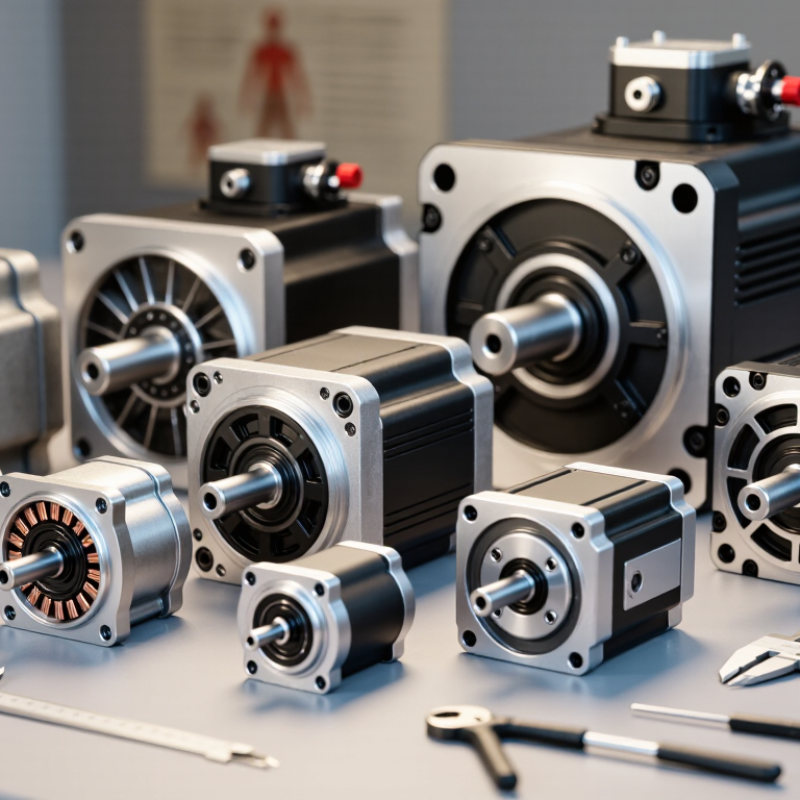
2026 Top Universal Motors Types for Global Buyers?

What Is a Universal Motor and How Does It Operate?

2026 Top Universal Motor Types for Global Buyers?

What Is a Universal Motor and How Does It Operate?

A universal motor is a series-wound motor that runs on AC or DC power. Its field winding and armature connect in series, so current flows through both parts. When AC reverses direction, both magnetic fields reverse together. Torque therefore remains in the same direction. A commutator and carbon brushes transfer current to the rotating armature. The result is strong starting torque, compact construction, and high operating speed.

The IEA’s Energy Efficiency 2024 analysis reports that electric motor systems consume about 50% of global electricity. This figure covers many motor types, but it shows why motor selection matters. Universal motors remain useful in vacuum cleaners, mixers, drills, and portable cutting tools. Their speed can exceed 20,000 revolutions per minute. That is impressive. It is also a weakness.

High speed creates noise, vibration, brush wear, and electromagnetic interference. The motor may need ventilation near its rear housing. Buyers should verify voltage, frequency, insulation class, duty cycle, and brush replacement access. IEC 60034 standards provide a useful reference for motor ratings and testing, but local appliance rules still require checking. A universal motor is not automatically efficient. In real use, a controlled induction or brushless motor may consume less energy and operate more quietly. The cheaper choice can become the less reliable choice.

2026 Top Universal Motor Types for Global Buyers

What Is a Universal Motor and How Does It Operate?

Universal motors are series-wound commutator motors designed to operate on either AC or DC power. Their field winding and armature are connected in series, so the magnetic field and armature current reverse together when AC polarity changes, allowing continuous rotation. The chart shows representative typical no-load speed levels for common universal-motor applications. Actual speed depends on motor design, load, voltage, gearing, and electronic control.

Which Universal Motor Types Are Available in 2026?

Which universal motor types are available in 2026? The core option remains the brushed, series-wound universal motor. It runs on AC or DC. Its laminated steel core, carbon brushes, and high-speed rotor deliver strong starting torque. The IEA 4E Motor Systems Annex estimates that motor systems consume about 46% of global electricity. The U.S. Department of Energy’s Motor Systems Market Assessment reports that motor-driven equipment uses roughly 69% of industrial electricity in the United States.

Buyers will commonly see four practical configurations. A non-compensated motor offers low cost and simple assembly. It suits mixers, small vacuum units, and intermittent power tools. A compensated design adds winding support near the armature. It improves commutation, reduces electromagnetic interference, and handles heavier duty better. Electronic speed control can use phase control or feedback sensing. This is a control package, not a separate motor family. Some 2026 listings blur that distinction. They should not.

For compact appliances, high-speed versions save weight but create more noise, brush wear, and heat. Lower-speed versions need stronger gearing and feel steadier. IEC 60034-1 provides guidance for ratings, temperature rise, and operating conditions. It does not replace application testing. Check voltage, frequency, load profile, insulation class, brush life, acoustic output, and spare-part access. Run the motor repeatedly at the real load. No-load testing is insufficient. I still see buyers choosing by peak RPM alone. That shortcut is easy, and often wrong.

How Do Universal Motors Differ in Power, Speed, and Design?

2026 Top Universal Motors Types for Global Buyers?

Universal motors differ mainly in power, speed, and construction. They can run on AC or DC power, which supports flexible equipment design. Their series-wound structure produces strong starting torque. This helps handheld tools, mixers, vacuum cleaners, and compact machines.

Power ratings can be misleading. A motor marked 800 watts may not deliver that output continuously. Buyers should check duty cycle, load conditions, voltage, and thermal limits. Small motors often reach 10,000 to 30,000 revolutions per minute. Speed changes quickly. Electronic controls can reduce speed, but poor control may create heat, vibration, or unstable torque.

Design details affect service life. Carbon brushes and commutators support current transfer, yet they gradually wear and create electrical noise. Ventilation openings need protection from dust without blocking airflow. A compact housing saves space, but it may limit cooling. Noise matters too. In practical equipment testing, balanced rotors, rigid bearings, and rubber mounts often improve comfort more than extra motor power. However, manufacturers sometimes overlook cable strain and brush access. That creates avoidable maintenance problems. Global buyers should compare rated power, peak speed, insulation class, cooling method, replacement parts, and operating frequency before selecting a motor. A careful specification sheet remains more reliable than a large wattage number.

Where Are Different Universal Motor Types Commonly Used?

Universal motors remain common where compact size, high starting torque, and adjustable speed matter. Series-wound universal motors power vacuum cleaners, kitchen mixers, hairdryers, and portable grinders. Their brushes and commutators allow operation from AC or DC supplies. They also create noticeable noise and electromagnetic interference. That trade-off is often acceptable in short-duty appliances.

Compensated universal motors are more suitable for demanding tools, including drills, sanders, saws, and small workshop machines. Their winding design reduces armature reaction and improves performance at higher loads. Non-compensated types appear in simpler, lower-cost appliances with moderate duty cycles. Electronically controlled versions are increasingly used in compact equipment requiring smoother speed adjustment, soft starting, or reduced energy waste.

In practical purchasing work, check rated voltage, duty cycle, cooling, brush access, and noise limits. A motor that performs well in a test may overheat inside a dusty enclosure. That detail is easy to miss. High-speed models can deliver strong cutting performance, but their brushes may require earlier replacement. For buyers serving different markets, local frequency, plug standards, repair skills, and replacement-part availability also influence the best choice. Specifications alone are not enough.

2026 Top Universal Motors Types for Global Buyers? - Where Are Different Universal Motor Types Commonly Used?

Comparison of widely used universal-motor configurations, typical operating characteristics, and common product applications for international buyers.

Universal Motor Type Typical Rated Output Typical No-Load Speed Main Performance Characteristics Common Applications Typical Supply Compatibility Where It Is Commonly Used Key Buying Considerations
Non-Compensated Series-Wound Universal Motor 100 W–1,200 W 8,000–30,000 r/min High starting torque, compact construction, low manufacturing cost, and strong speed variation with load. It can produce more audible noise and electromagnetic interference than compensated designs. Vacuum cleaners Handheld power tools Small kitchen appliances Portable polishing tools AC or DC; commonly designed for 100–127 V or 220–240 V systems, with frequency-specific versions for 50 Hz or 60 Hz operation. Widely used worldwide, especially in cost-sensitive household appliances and portable tools. Check brush life, commutator design, acoustic noise, ventilation, insulation class, and conducted/radiated EMI performance.
Compensated Series-Wound Universal Motor 300 W–2,000 W 6,000–25,000 r/min Uses compensating windings to reduce armature-reaction effects and improve commutation. It generally offers better electromagnetic performance and smoother operation under load than a basic non-compensated design. Heavy-duty power tools High-power mixers Floor-care equipment Professional food processors AC or DC, normally engineered for a specific voltage and frequency range. Common in higher-power consumer, commercial, and professional equipment across Europe, Asia-Pacific, North America, and other mature appliance markets. Compare power density, temperature rise, commutation quality, EMI compliance, and the additional cost and size of the compensating winding.
High-Speed Compact Universal Motor 150 W–1,500 W 15,000–40,000 r/min Optimized for high power-to-weight ratio and rapid acceleration. The motor is usually paired with a fan, impeller, gearbox, or tool transmission to convert high speed into useful product performance. Hair dryers Vacuum cleaners Small blowers Rotary tools AC or DC; the insulation system and commutator must be selected for the intended voltage and speed. Common in compact personal-care products, cleaning appliances, and lightweight portable equipment worldwide. Evaluate overspeed margin, rotor balance, bearing life, cooling airflow, brush wear, vibration, and fan noise.
High-Torque Universal Motor with Gear Reduction 100 W–1,000 W motor input Motor: 8,000–25,000 r/min; output speed depends on gearing Combines the high starting torque of a series motor with mechanical speed reduction. It is suitable when the final product requires lower speed and increased shaft torque. Electric mixers Food processors Small domestic machines Actuator mechanisms AC or DC, with voltage and frequency selected according to the complete appliance design. Widely used in household appliances where compact size and intermittent high torque are more important than quiet continuous operation. Assess gearbox efficiency, lubrication, stall protection, duty cycle, output torque, gear noise, and thermal limits.
Low-Noise Universal Motor with Improved Commutation 200 W–1,500 W 5,000–22,000 r/min Uses optimized brush geometry, winding design, rotor balancing, and suppression components to reduce sparking, vibration, and acoustic noise while retaining universal-motor torque characteristics. Premium vacuum cleaners Blenders Sewing machines Indoor appliances AC or DC; often designed with additional electrical suppression for household EMC requirements. Common in markets with stricter household appliance noise and electromagnetic compatibility expectations. Request measured sound-pressure data, brush-sparking limits, EMC test results, vibration values, and expected brush replacement intervals.
Intermittent-Duty Universal Motor 300 W–2,000 W 7,000–28,000 r/min Designed for short operating cycles rather than continuous full-load running. Its thermal design is matched to a defined duty cycle, such as several minutes of operation followed by a cooling period. Drills Grinders Cutting tools Portable cleaning equipment AC or DC, commonly matched to regional portable-tool voltage systems. Very common in portable tools and equipment used in construction, maintenance, workshops, and home improvement. Confirm duty-cycle rating, stall tolerance, thermal cutoff settings, brush replacement access, overload protection, and enclosure cooling.
Low-Power Precision Universal Motor 20 W–250 W 3,000–18,000 r/min Prioritizes compact dimensions, controllable speed, and acceptable torque for light-duty mechanisms. It is generally less suitable for long-duration operation at maximum load. Sewing machines Small laboratory devices Compact fans Light-duty mechanisms AC or DC, including low-voltage DC versions where a suitable controller or power supply is provided. Used globally in compact equipment and products requiring a small, economical motor with variable-speed capability. Check minimum controllable speed, torque ripple, brush noise, controller compatibility, insulation system, and mechanical mounting accuracy.

Note: The power and speed figures are indicative engineering ranges for commonly encountered universal-motor applications, not standardized ratings. Actual values depend on voltage, frequency, winding design, cooling method, duty cycle, load, commutator construction, and applicable regional safety and EMC requirements.

How Can Global Buyers Select the Right Universal Motor?

2026 Top Universal Motors Types for Global Buyers?

How Can Global Buyers Select the Right Universal Motor?

Selecting a universal motor starts with the machine, not the catalogue. Define the load, speed range, duty cycle, and available power supply. A 120-volt, 60-hertz design may not suit a 230-volt, 50-hertz appliance. Universal motors can run on AC or DC, but their windings, insulation, and cooling system still require correct matching. The IEA’s Energy Efficiency 2023 report states that electric motor systems consume roughly half of global electricity. This figure covers many motor types, not only universal motors. It still shows why efficiency deserves attention.

Check rated speed, starting torque, noise, vibration, and thermal limits. High-speed models often deliver strong power from a compact housing, but brushes and commutators may wear faster. Ask for brush-life testing under the actual load, not only no-load laboratory results. IEC 60034-1 supports consistent motor performance testing, while IEC 60335-1 addresses safety for many household appliances. These standards help, but they do not replace application testing. Details matter.

A practical selection sheet should include insulation class, protection level, electromagnetic interference control, bearing life, and replacement-part access. Keep it simple. Request samples at the lowest and highest expected voltage. Measure temperature after repeated cycles. A perfect specification rarely exists. In real evaluations, buyers sometimes prioritize peak speed and overlook acoustic noise or brush dust. That choice may pass initial testing, yet fail customer expectations later. Recheck the weak points before approving mass production.

FAQS

What is a universal motor?

A universal motor is a series-wound motor. It can operate with AC or DC power. Its field winding and armature connect in series. Both magnetic fields reverse together with AC. Torque keeps the same direction. Simple, but not silent.

How does a universal motor produce strong starting torque?

Current flows through the field winding and rotating armature. This creates strong magnetic interaction during startup. The commutator and carbon brushes transfer current to the rotor. The motor can start quickly under load. That strength increases wear.

Where are universal motors commonly used?

They suit mixers, vacuum units, drills, and portable cutting tools. These machines often need compact size and rapid acceleration. A small housing can deliver high rotational speed. They are less suitable for quiet, continuous operation.

What universal motor types may buyers encounter?

The common version is a brushed, series-wound motor. Non-compensated designs cost less and suit intermittent household use. Compensated designs improve commutation and reduce electrical interference. Electronic speed control may add phase control or feedback sensing. It is a control system, not a separate motor family.

How should buyers choose the correct universal motor?

Start with the machine’s load, speed range, and duty cycle. Confirm voltage and frequency carefully. A 120-volt, 60-hertz motor may not suit a 230-volt, 50-hertz appliance. Check insulation, cooling, bearing life, and protection levels. Catalogue speed alone is a weak decision method.

Are high-speed universal motors always better?

No. Some models exceed 20,000 revolutions per minute. High speed reduces motor size and increases power density. It also creates more noise, vibration, heat, and brush wear. A lower-speed motor may feel steadier. I would not choose peak speed alone.

How can buyers test a universal motor before production?

Test samples at the lowest and highest expected supply voltage. Run them repeatedly at the real machine load. Measure temperature, noise, vibration, and electrical interference. Inspect brush dust and commutator condition. No-load testing is insufficient.

How can universal motor efficiency be improved?

Match the motor closely to the real load. Use speed control when changing output is necessary. Provide suitable ventilation near the rear housing. Replace worn brushes before contact becomes unstable. A controlled brushless or induction design may use less energy. The cheaper motor may cost more later.

Conclusion

This guide explains what Universal Motors are, how they operate, and why their ability to run on both AC and DC power makes them useful in many applications. It reviews the main motor types available in 2026, including compact designs for household equipment, higher-power models for tools and machinery, and configurations optimized for speed, efficiency, or durability. Readers will also learn how motor construction, winding design, cooling methods, and control systems influence operating performance.

The article compares Universal Motors by power range, speed characteristics, size, noise, maintenance needs, and expected service life. It highlights common applications such as vacuum cleaners, kitchen appliances, hand tools, sewing equipment, and other portable devices. For global buyers, the guide provides practical selection considerations, including voltage compatibility, load requirements, speed control, thermal protection, efficiency expectations, safety certification, environmental conditions, supply consistency, and total operating cost.

Liam

Liam

Liam is a dedicated marketing professional with a profound expertise in the industry, where he excels at highlighting the unique advantages of our core products. With a keen understanding of market trends and consumer needs, Liam frequently updates our company’s professional blog, providing......