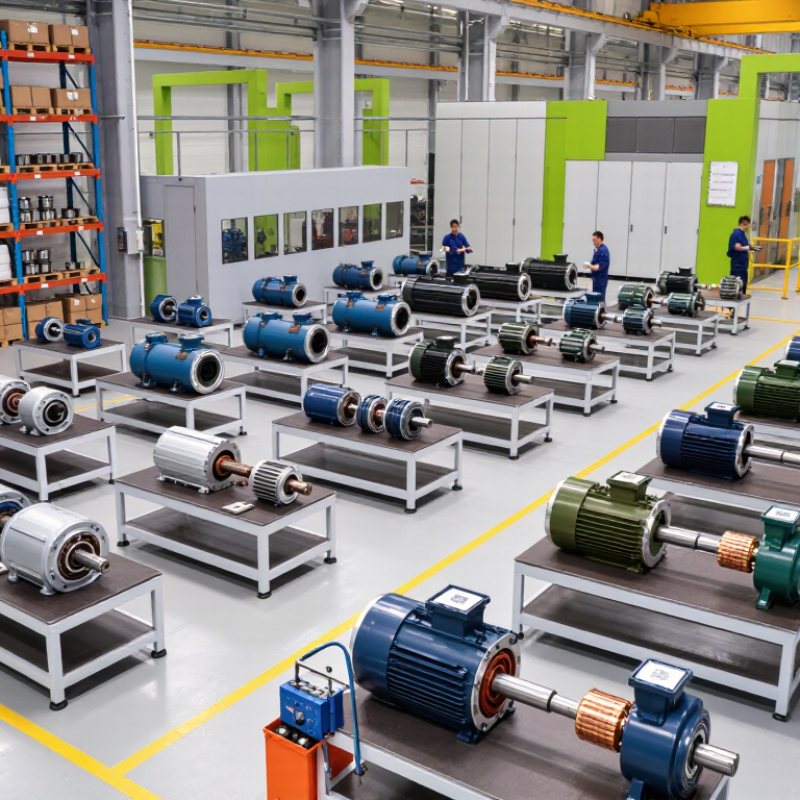
China Top 10 Rotary Motors Manufacturers for Global Buyers

Time:2026-09-17 Author:Amelia
0%

Choosing reliable Rotary Motors suppliers can shape a machine’s efficiency, service life, and operating cost. For global buyers, the decision involves more than comparing prices or reading product catalogs. Motor type, torque stability, speed control, enclosure protection, noise levels, and replacement support all deserve careful review. A motor that performs well in a clean factory may struggle in dusty workshops or humid ports.

This guide presents China’s top 10 Rotary Motors manufacturers for international purchasing teams. The selection considers manufacturing experience, product range, quality systems, export capability, customization services, and after-sales communication. Practical details matter. Buyers should examine test reports, winding materials, bearing quality, insulation grades, and delivery records before placing large orders. Factory audits can also reveal useful differences, such as production discipline, spare-parts storage, and final inspection routines.

No ranking is perfect. Supplier strengths can change with management, capacity, or market demand. Some manufacturers may excel at standard motors, while others handle engineered solutions better. That distinction matters.

The goal is not to promote one universal choice. It is to help buyers ask sharper questions and reduce avoidable sourcing risks. We also recognize that certifications and specifications should be verified directly with each manufacturer. Product information may change over time. Careful validation remains essential.

With a balanced comparison, procurement teams can identify suitable partners for conveyors, pumps, packaging equipment, automation systems, and other industrial applications. Reliable results begin with evidence, not attractive promises.

China Top 10 Rotary Motors Manufacturers for Global Buyers

Rotary Motors: Types, Features, and Common Industrial Applications

Rotary Motors: Types, Features, and Common Industrial Applications

Rotary motors convert electrical energy into continuous mechanical rotation. AC induction motors remain common because they are durable, affordable, and easy to maintain. Synchronous motors provide stable speed under changing loads. Servo motors offer precise positioning for robotic arms, packaging lines, and CNC equipment. Stepper motors move in controlled increments, although they may lose torque at higher speeds.

In factory inspections, motor selection often depends on load behavior, not rated power alone. A conveyor carrying uneven cartons may need strong starting torque. A pump requires steady operation and suitable protection against moisture. Check efficiency, enclosure rating, insulation class, vibration levels, and duty cycle. These details affect energy use and service life. A motor can look suitable on paper, yet perform poorly with an unsuitable drive or poor alignment.

Tips: Match the motor to the real load profile. Confirm voltage, frequency, shaft dimensions, and mounting style before purchase. Ask for test records, efficiency data, and maintenance guidance. Leave room for honest review. A larger motor is not always safer; it can waste energy and create unnecessary mechanical stress. During commissioning, measure temperature, noise, current, and vibration after the machine reaches normal operating conditions. Small installation errors often become expensive faults later.

How China’s Top Rotary Motor Manufacturers Are Evaluated

China Top 10 Rotary Motors Manufacturers for Global Buyers

Evaluating China’s top rotary motor manufacturers requires more than comparing prices. Experienced buyers inspect torque stability, noise levels, heat resistance, and service life under real operating conditions. A reliable manufacturer should provide test records, material specifications, and clear production tolerances. Factory audits also reveal practical details, such as clean assembly areas, calibrated instruments, and traceable component storage.

Technical expertise matters when motors operate continuously or in dusty workshops. Engineers should explain winding design, bearing selection, insulation class, and overload protection without vague claims. Certification documents must match the actual model, not a similar product. Ask for samples and measure vibration, starting current, and temperature after several hours. Some suppliers communicate well but offer inconsistent samples. That gap deserves attention.

Tips: Request a documented quality plan before placing an order. Compare sample performance with mass-production units. Check warranty terms, spare-part availability, and response times. Speak with the technical team, not only a sales representative. Independent inspection can reduce avoidable risks, although it may not detect every future failure. A practical evaluation should also consider customization capacity, packaging strength, delivery consistency, and communication during design changes. Sometimes the cheapest quotation hides testing limitations or weaker after-sales support.

Profiles of the Top 10 Chinese Rotary Motor Manufacturers

China’s rotary motor sector serves factory automation, pumps, logistics, medical equipment, and renewable-energy systems. The International Energy Agency reports that electric motor systems consume about 50% of global electricity. Efficiency is not a minor purchasing detail.

The ten manufacturer profiles show different strengths. One focuses on compact BLDC motors for fans and appliances. Another builds high-torque geared motors for conveyors. Several specialize in servo motors, encoder integration, and motion-control packages. Other suppliers concentrate on industrial AC motors, stepper motors, pump drives, or customized OEM assemblies.

Some factories operate automated winding lines and conduct temperature-rise testing. Others rely more heavily on manual inspection, which may affect consistency. Export experience also varies. A supplier may offer excellent prototypes but weaker documentation for overseas installation. That gap deserves attention.

Tips:

Request efficiency curves, no-load current, insulation-class data, noise readings, and endurance-test records. Check whether stated performance follows IEC 60034 testing methods. The U.S. Department of Energy notes that motor-driven systems represent a major share of industrial electricity use, so small efficiency gains can reduce operating costs. Also compare bearing suppliers, shaft tolerances, ingress protection, warranty terms, and spare-part availability. A lower quotation can hide higher maintenance expenses. I would not rank manufacturers by catalog size alone. Actual test evidence matters more. Metrics can still be incomplete.

Comparing Motor Performance, Quality, Certifications, and Pricing

China Top 10 Rotary Motors Manufacturers for Global Buyers

Comparing ten rotary motor manufacturers requires more than checking rated power. Buyers should examine torque stability, operating speed, vibration, noise, and duty cycle. A motor may reach its advertised output, yet overheat during continuous production. Request test curves at the actual voltage and load. Ask for winding temperature data, bearing specifications, and protection ratings. Small details matter.

Quality depends on repeatable production, not attractive samples alone. Review ISO 9001 records, incoming material controls, and final inspection reports. For international projects, verify applicable CE, RoHS, or other market-specific compliance documents. Certificates should match the exact motor series and factory address. Traceable serial numbers strengthen after-sales support. Some suppliers provide excellent documents but weak testing evidence. That gap deserves attention.

Pricing comparisons should include tooling, packaging, spare parts, shipping, duties, and warranty terms. The lowest quotation is rarely the lowest operating cost. A modestly higher price may provide better copper content, tighter machining tolerances, and longer service life. However, premium pricing does not automatically prove superior performance. I have seen purchasing teams trust brochures too quickly. That is a mistake worth reconsidering. Use sample testing, factory audits, and a clear acceptance checklist before placing volume orders. Leave room for technical changes, because the first specification is not always perfect.

How Global Buyers Can Select and Import the Right Rotary Motor

China Top 10 Rotary Motors Manufacturers for Global Buyers

Selecting a rotary motor starts with the machine, not the supplier’s catalog. Define required torque, speed range, voltage, duty cycle, shaft size, and installation space. A motor running continuously needs different thermal protection from one used for short movements. Confirm the load profile with an engineer. Guesswork becomes expensive.

Ask each shortlisted manufacturer for a dated datasheet, test report, wiring diagram, and sample unit. Check whether specifications remain stable between samples and mass production. Factory audits can review winding equipment, balancing processes, inspection records, and traceability. A video call helps, but it cannot replace physical verification. Small details matter. Listen for clear answers about noise, vibration, bearings, and spare parts.

Before importing, confirm the applicable electrical and safety requirements in the destination market. Request conformity documents, packaging dimensions, net weight, HS-code guidance, and commercial invoice details. Clarify Incoterms, lead time, warranty handling, and payment milestones in writing. Include acceptance criteria, such as measured torque and insulation resistance. Some buyers focus only on unit price. That is a weak calculation. Freight, testing, delays, and rejected goods can change the final cost sharply. I would also order a pilot batch before committing to large volumes. It may feel slower, but one overlooked connector or mounting tolerance can stop an entire production line.

China Top 10 Rotary Motors Manufacturers for Global Buyers - How Global Buyers Can Select and Import the Right Rotary Motor

Profile Primary Motor Focus Typical Power Range Common Voltage / Frequency Recommended Applications Standards to Request Key Buyer Verification Import Considerations
Manufacturer Profile 01 Three-phase squirrel-cage induction motors 0.12–500 kW 220–690 V; 50/60 Hz Pumps, fans, compressors, conveyors and general industrial machinery IEC 60034, IEC 60072, IEC 60529, applicable efficiency regulations Rated output, current, efficiency, power factor, temperature rise and locked-rotor performance Confirm frame size, mounting arrangement, shaft dimensions, terminal-box position and packing protection
Manufacturer Profile 02 High-efficiency IE3 and IE4 induction motors 0.75–315 kW 380–415 V; 50 Hz, with other ratings available Continuous-duty production lines and energy-sensitive facilities IEC 60034-30-1, IEC 60034-2-1, IEC 60034-1 Verify efficiency at the required load points rather than relying only on no-load test data Check destination-country minimum efficiency requirements and customs product classification
Manufacturer Profile 03 Permanent-magnet synchronous motors 1–500 kW Usually inverter-driven; voltage depends on the drive system High-efficiency pumps, compressors, elevators and variable-speed equipment IEC 60034 series, IEC 61800 for drive systems where applicable Motor-drive compatibility, encoder requirements, demagnetization protection and operating speed range Request the complete motor and inverter parameter list; do not purchase the motor as an isolated replacement
Manufacturer Profile 04 Servo motors with feedback systems 0.05–30 kW 200–480 V AC; drive-dependent Robotics, CNC equipment, packaging, textile and positioning systems IEC 60034, IEC 61800-5-1, applicable EMC and machinery-safety requirements Rated torque, peak torque, inertia, encoder resolution, brake type and connector pinout Confirm software compatibility, spare encoder availability and secure protection for precision components
Manufacturer Profile 05 Brushless DC motors and compact permanent-magnet motors 10 W–5 kW 12–120 V DC; controller-dependent Medical equipment, automation modules, small pumps, fans and AGV subsystems IEC 60034 where applicable; relevant low-voltage, EMC and product-safety standards Hall-sensor sequence, controller protocol, continuous torque, peak current and thermal limits Protect magnets and electronics from impact, moisture and electromagnetic interference during transit
Manufacturer Profile 06 Geared rotary motors and integrated gearmotors 25 W–75 kW 24–690 V; AC or DC configurations Material handling, mixers, conveyors, doors and low-speed drives IEC 60034, IEC 60072, IEC 60529 and gearbox-specific technical requirements Gear ratio, output torque, service factor, backlash, lubrication and allowable radial load Confirm oil type, mounting orientation, drain-plug location and leakage-prevention packaging
Manufacturer Profile 07 Explosion-protected motors 0.12–500 kW 220–690 V; 50/60 Hz Chemical plants, petroleum facilities, gas processing and combustible-dust areas IEC 60079 series, IECEx or destination-market explosion-protection requirements Hazardous-zone classification, gas or dust group, temperature class and certificate validity Use only approved cable glands and accessories; certificate details must match the exact motor model
Manufacturer Profile 08 Waterproof and corrosion-resistant motors 0.12–160 kW 220–690 V; 50/60 Hz Food processing, wastewater treatment, marine equipment and outdoor machinery IEC 60529, IEC 60034 and applicable hygienic or marine requirements Ingress-protection rating, coating system, stainless-steel parts, drainage and washdown resistance Specify salt exposure, cleaning chemicals, ambient temperature and installation orientation in writing
Manufacturer Profile 09 Single-phase capacitor-start and capacitor-run motors 0.06–7.5 kW 110–240 V; 50/60 Hz Small pumps, fans, compressors, agricultural equipment and workshop machinery IEC 60034, IEC 60072 and applicable household or industrial safety requirements Starting torque, capacitor specification, duty cycle, overload protection and supply tolerance Confirm local plug, cable, thermal protector and electrical safety requirements before ordering
Manufacturer Profile 10 Custom OEM rotary motors Application-specific; commonly 10 W–500 kW Defined by the buyer’s electrical and mechanical specifications Machine builders, replacement projects and integrated equipment programs Applicable IEC, NEMA, UL, CE, EMC and destination-market requirements Review drawings, tolerance limits, prototype test reports, quality plan and change-control process Use a signed technical specification, approved sample, inspection plan, Incoterm and warranty terms
Buyer Note: Power ranges and configurations are typical industry ranges, not guaranteed specifications for every supplier. Before importing, obtain the exact datasheet, dimensional drawing, certification documents, test report, packing list, commercial invoice, country-of-origin information and applicable customs classification.

FAQS

What does a rotary motor do?

It converts electrical energy into continuous mechanical rotation for equipment such as conveyors, pumps, and robotic systems.

Which motor suits a conveyor with uneven cartons?

Choose a motor with strong starting torque and suitable overload capacity. Rated power alone may not tell the full story.

When is a synchronous motor useful?

It helps maintain stable speed when the load changes during operation. This matters in steady production processes.

What are servo motors commonly used for?

Servo motors provide precise positioning for robotic arms, packaging equipment, and computer-controlled machine tools. Precision matters here.

What limitation do stepper motors have?

They move in controlled increments but may lose torque at higher speeds. This weakness is easy to overlook.

Which motor details should buyers confirm before ordering?

Confirm voltage, frequency, shaft dimensions, mounting style, enclosure rating, insulation class, and duty cycle.

How can buyers evaluate a motor supplier’s quality?

Request test records, material specifications, production tolerances, and traceable component information. Visit clean assembly areas when possible.

What should testing include after installation?

Measure temperature, noise, current, and vibration after normal operating conditions begin. Small alignment errors can become costly faults.

Are certificates enough to prove motor quality?

No. Certificates should match the exact model and factory. Testing evidence and sample performance still need review.

Is the lowest motor price usually the best choice?

Not always. Include packaging, shipping, spare parts, duties, warranty, energy use, and likely service costs. Premium pricing proves little by itself.

Conclusion

Rotary Motors are essential components in automation, manufacturing, material handling, packaging, and other industrial systems. This guide explains their main types, operating features, efficiency considerations, and common applications, helping global buyers understand how different motor designs meet different speed, torque, control, and durability requirements. It also outlines how China’s leading manufacturers can be evaluated through production capabilities, engineering expertise, quality management, certifications, customization services, and export experience.

The article presents profiles of ten notable Chinese manufacturers without focusing on brand promotion, then compares their performance, build quality, compliance documentation, delivery capacity, after-sales support, and pricing. It concludes with practical advice for selecting and importing the right Rotary Motors, including defining technical specifications, checking compatibility, confirming testing standards, reviewing quotations, assessing total ownership costs, and preparing logistics and inspection plans. These considerations can help international buyers make informed, reliable, and cost-effective purchasing decisions.

Amelia

Amelia

Amelia is a seasoned marketing professional with a wealth of expertise in our company’s core offerings. With an unwavering passion for driving growth and innovation, she plays a pivotal role in shaping our marketing strategies and enhancing brand visibility. A key aspect of her responsibilities......