 Zelt Motor
How to Choose Brushless Motors in 2026?
Choosing Brushless Motors in 2026 requires more than comparing speed, voltage, and price. The right decision begins with the application’s real operating conditions. A motor inside a warehouse robot may run quietly for sixteen hours daily. A cooling fan may face dust, heat, and frequent starts. These details change the required torque, bearings, winding design, and controller.
Industry demand is becoming more demanding. The International Energy Agency reported that global electric car sales exceeded 17 million in 2024, representing more than 20% of new-car sales. This growth increases pressure for efficient traction motors, compact power electronics, and reliable thermal management. The U.S. Department of Energy also identifies motor-driven systems as major industrial electricity users. Its energy-efficiency guidance shows why small efficiency gains can produce meaningful operating savings across factories. These reports do not select a motor for you. They establish the practical direction.
Start with duty cycle, not marketing claims. Check continuous torque, peak torque, speed range, ambient temperature, noise limits, and controller compatibility. Hall sensors may simplify low-speed control, while sensorless designs can reduce wiring and maintenance. However, sensorless startup can become uncertain under heavy loads. That limitation is easy to overlook. Efficiency ratings also need context. A motor may perform well at one test point but lose efficiency during rapid acceleration. I would compare efficiency maps, not one impressive percentage. Independent test data, supplier quality records, thermal tests, and warranty terms deserve equal attention. The International Energy Agency, U.S. Department of Energy, and verified manufacturer documentation provide stronger references than unsupported online claims. Mistakes still happen. A careful selection process reduces them.
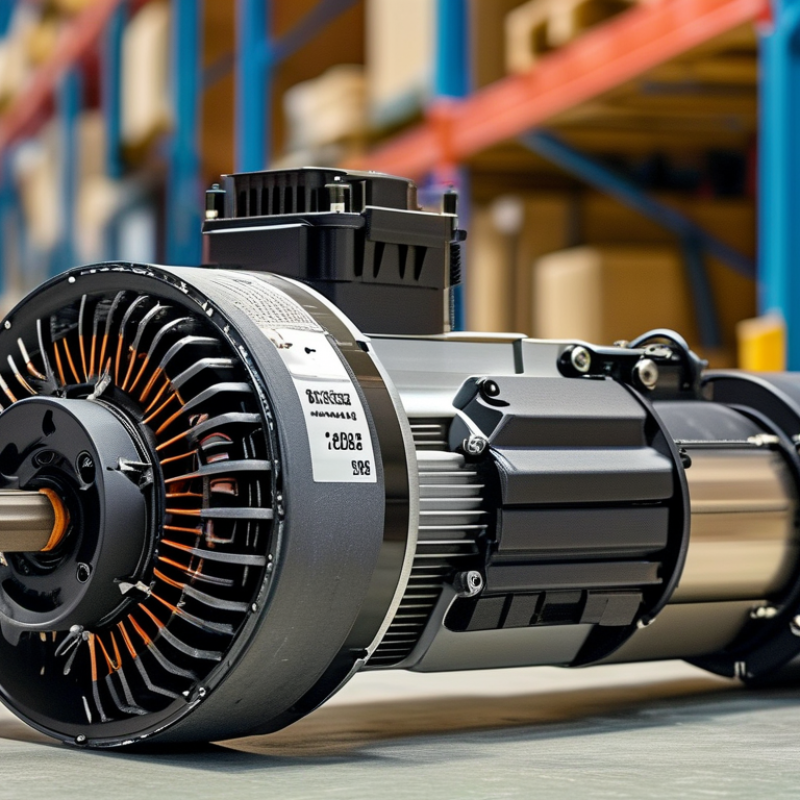
Brushless Motor Fundamentals and 2026 Technology Trends
Brushless motor fundamentals matter more in 2026, as efficiency targets become stricter. The International Energy Agency reports that electric motor systems consume nearly half of global electricity. Therefore, choosing only by peak efficiency is a mistake. Check continuous torque, speed range, duty cycle, and heat limits. A motor producing 2 Nm at 6,000 rpm may perform poorly at 800 rpm. Real operating points matter more than catalogue highlights.
New designs increasingly combine sensorless control, embedded temperature monitoring, and compact drive electronics. Silicon carbide and gallium nitride switches can reduce switching losses, especially at higher speeds. MarketsandMarkets projects the brushless DC motor market to grow at roughly 9% annually through 2029. That growth reflects demand from robotics, electric mobility, automation, and quieter appliances. However, higher speed often creates bearing stress, electromagnetic noise, and difficult cooling problems. I have seen efficient prototypes lose performance inside small, poorly ventilated enclosures. The datasheet did not show that clearly.
Tips: Match the motor to the controller, not separately. Request efficiency curves at your real load. Check winding temperature, ingress protection, encoder resolution, acoustic limits, and regenerative braking behavior. Sensorless control lowers hardware cost, but it may struggle during startup or sudden load changes. A small safety margin helps, though an oversized motor can reduce system efficiency. Reliability decisions still require testing. Short tests can mislead. Cite: International Energy Agency, Energy Efficiency 2024; MarketsandMarkets, Brushless DC Motors Market analysis, 2024.
How to Choose Brushless Motors in 2026? - Brushless Motor Fundamentals and 2026 Technology Trends
| Selection Dimension | What It Means | Typical Engineering Data | How to Choose in 2026 | Practical Check |
|---|---|---|---|---|
| Motor Architecture | Brushless motors use electronic commutation instead of mechanical brushes and a commutator. | Common types include inner-rotor, outer-rotor, synchronous reluctance-assisted, and integrated motor-drive designs. | Select the architecture according to inertia, packaging, speed, cooling, noise, and maintenance requirements. | Confirm rotor inertia, allowable overspeed, installation space, and cooling path. |
| BLDC or PMSM Control | BLDC motors are commonly driven with trapezoidal commutation, while PMSMs are generally controlled with sinusoidal or field-oriented methods. | Hall sensors may provide six-step commutation; encoders or resolvers support higher-precision closed-loop control. | Use field-oriented control when low torque ripple, quiet operation, high efficiency, or accurate positioning is important. | Check controller compatibility, feedback type, commutation angle, and software tuning requirements. |
| Rated Voltage | The voltage range determines electrical compatibility and influences speed, current, insulation stress, and inverter selection. | Common low-voltage systems include 12 V, 24 V, 36 V, 48 V, and 72 V DC; industrial systems may use higher DC-bus voltages. | Choose a motor whose voltage range matches the battery or DC bus under minimum and maximum operating conditions. | Allow for battery voltage variation, regenerative voltage rise, cable drop, and inverter overvoltage limits. |
| Continuous Torque | Continuous torque is the torque the motor can produce without exceeding its thermal limits under specified conditions. | It depends on winding current, cooling method, ambient temperature, mounting orientation, and duty cycle. | Select continuous torque above the calculated load torque with a reasonable thermal margin rather than relying only on peak torque. | Calculate load torque at the slowest speed, highest friction, maximum payload, and worst ambient temperature. |
| Peak Torque | Peak torque is available for short periods during acceleration, starting, impact loading, or transient disturbances. | Peak capability is limited by current, demagnetization risk, inverter capacity, mechanical strength, and thermal recovery time. | Use peak torque for verified transient requirements, not as a substitute for inadequate continuous torque. | Review peak duration, repetition rate, acceleration profile, and controller current limits. |
| Speed Range | The usable speed range is determined by back EMF, supply voltage, pole count, mechanical limits, and field-weakening capability. | Maximum speed must account for rotor stress, bearing speed, winding losses, and inverter switching limits. | Choose a motor that meets both the lowest required speed and the maximum operating speed without excessive field weakening. | Verify speed-torque curves at the actual voltage, temperature, and cooling conditions. |
| Power Rating | Mechanical output power is approximately torque multiplied by angular speed. | P = T × ω; for torque in N·m and speed in revolutions per minute, P in watts is approximately T × rpm × 0.1047. | Size the motor using the complete duty profile, not only the highest instantaneous power point. | Compare continuous, intermittent, acceleration, braking, and standby operating periods. |
| Efficiency | Efficiency is the ratio of mechanical output power to electrical input power and varies with speed, torque, temperature, and control method. | Losses include copper loss, iron loss, magnet loss, bearing loss, windage, switching loss, and inverter conduction loss. | Evaluate efficiency across the real operating map, especially the load points that dominate annual energy consumption. | Request efficiency maps rather than relying on one peak-efficiency value. |
| Thermal Management | Motor temperature directly affects winding resistance, insulation life, magnet performance, and permissible current. | Cooling may be natural convection, forced air, conduction through the housing, or liquid cooling. | Prioritize thermal design when the motor operates continuously, at low speed with high torque, or in a hot enclosure. | Check winding temperature limits, thermal resistance, sensor location, and derating curves. |
| Feedback and Position Accuracy | Feedback devices allow the controller to estimate or measure rotor position, speed, and sometimes load-related conditions. | Hall sensors provide basic position information; magnetic or optical encoders and resolvers support more precise control. | Use sensorless control for cost-sensitive, predictable-speed applications; use feedback for low-speed torque and positioning performance. | Define allowable position error, zero-speed starting behavior, cable length, and electromagnetic-noise exposure. |
| Acoustic Noise and Vibration | Noise and vibration can result from torque ripple, slot harmonics, bearing effects, imbalance, structural resonance, and inverter switching. | Sinusoidal current control, optimized slot-pole combinations, balanced rotors, and suitable switching frequencies can reduce unwanted noise. | For appliances, medical equipment, and collaborative machines, evaluate the complete motor-drive-mechanical assembly. | Request sound-pressure data, vibration limits, test speed, test distance, and mounting conditions. |
| Power Density | Power density describes output power or torque relative to motor mass or volume. | Higher power density generally requires improved electromagnetic design, thermal paths, materials, manufacturing accuracy, and control. | Use high-power-density designs when space and weight are critical, but verify temperature rise and service life. | Compare torque per kilogram, torque per volume, cooling hardware, and complete system mass. |
| Environmental Protection | Ingress protection indicates resistance to solids and water under defined test conditions. | Typical applications may require protection such as IP54, IP65, or higher, depending on dust, washdown, humidity, and immersion exposure. | Select the enclosure and connector protection level according to the actual installation environment. | Check shaft-seal performance, condensation control, corrosion resistance, and cable-entry protection. |
| Regenerative Braking | During deceleration, a brushless motor can operate as a generator and return energy to the DC bus or battery. | Regeneration is limited by battery charge acceptance, bus voltage, inverter current, braking resistor capacity, and mechanical load. | Consider regenerative behavior in vertical axes, high-inertia loads, electric mobility, and frequent start-stop systems. | Verify overvoltage protection, braking strategy, energy storage limits, and emergency-stop behavior. |
| 2026 Control Trend: Sensorless FOC | Sensorless field-oriented control estimates rotor position from electrical measurements and motor models. | It can reduce wiring and component count, but low-speed starting and zero-speed control remain application-dependent challenges. | Consider sensorless control where cost, reliability, and cable reduction outweigh the need for maximum low-speed precision. | Test startup under maximum load, rapid reversals, low-speed operation, and parameter variation. |
| 2026 Integration Trend: Motor and Drive Co-Design | The motor, inverter, firmware, feedback, and thermal system are increasingly designed as one coordinated platform. | Integration can reduce wiring and package size while improving tuning, diagnostics, and system-level efficiency. | Choose an integrated solution when installation space, commissioning time, and coordinated protection are important. | Review serviceability, heat transfer between electronics and motor, firmware access, and replacement procedures. |
| 2026 Efficiency Trend: Wide-Bandgap Inverters | Silicon-carbide and gallium-nitride switching devices can support lower switching losses or higher switching frequencies in suitable voltage and power ranges. | System benefits depend on gate-drive design, electromagnetic compatibility, motor insulation, switching frequency, and thermal management. | Evaluate the complete inverter-motor system instead of assuming that a newer semiconductor automatically improves total efficiency. | Check common-mode voltage, bearing-current risk, cable reflections, insulation stress, and conducted emissions. |
| 2026 Reliability Trend: Condition Monitoring | Operational data can be used to identify overheating, bearing wear, imbalance, abnormal current, and insulation-related problems. | Possible inputs include phase current, temperature, vibration, speed, bus voltage, and operating hours. | Use monitoring when downtime is costly or when motors operate in remote, continuous, or safety-critical equipment. | Define data ownership, alarm thresholds, cybersecurity requirements, and maintenance response procedures. |
| 2026 Sustainability Consideration | Material use, operating energy, repairability, recyclability, and expected service life affect total environmental impact. | Permanent magnets may contain critical raw materials; copper, electrical steel, aluminum, and electronics also contribute to lifecycle impact. | Compare lifetime energy consumption and maintainability rather than evaluating purchase price alone. | Request material declarations, efficiency data, expected life, repair options, and end-of-life guidance. |
| Validation Before Purchase | A motor should be evaluated under the complete mechanical, electrical, thermal, environmental, and control conditions of the final application. | Key tests include startup, continuous operation, overload, stall protection, reversal, braking, temperature rise, noise, vibration, and endurance. | Use application-specific testing and documented acceptance criteria before committing to production quantities. | Confirm test conditions, measurement accuracy, safety margins, software version, and repeatability. |
FAQS
Check voltage, continuous torque, peak torque, speed range, duty cycle, and heat limits. Real operating points matter. A motor rated for 6,000 rpm may perform poorly at 800 rpm.
Measure the actual voltage during acceleration, not only the battery’s label voltage. A 48-volt system may briefly drop below 40 volts under heavy load. The motor and controller must tolerate that range safely.
Match continuous speed to the application’s normal operating range. Calculate starting torque, lifting torque, and sudden-load torque separately. A high-speed motor may require gearing, adding weight and energy losses.
Sensored control usually improves low-speed starting and precise movement. Sensorless control can reduce hardware and wiring costs. It may struggle during startup or sudden load changes.
Check winding temperature, enclosure ventilation, duty cycle, and continuous current. A motor can meet the torque target and still overheat. Small housings need extra thermal margin.
Confirm voltage, continuous current, peak current, phase connections, and sensor compatibility. The controller’s peak rating should exceed measured demand. Do not trust labels alone.
Measure mounting holes, shaft diameter, shaft length, shaft shoulder, motor diameter, and clearance. I once missed the shaft shoulder. The coupling could not seat properly.
Test at low power, then monitor current, temperature, vibration, and unusual noise. Keep cables secured away from rotating parts. Stop if the motor stutters or heats quickly. Short tests can mislead.
Conclusion
Choosing the right Brushless Motors in 2026 requires more than comparing catalog specifications. Begin by understanding the motor’s operating principles, current technology trends, and the demands of the intended application. Define the required voltage, speed range, torque, duty cycle, load characteristics, environmental conditions, and available installation space. These factors create a practical foundation for selecting a motor that can perform consistently under real operating conditions.
Next, compare efficiency, thermal performance, control compatibility, reliability, and maintenance requirements. A suitable motor should provide sufficient torque without excessive energy consumption or heat generation, while its controller must support the required feedback, regulation, and protection functions. Before final selection, verify mechanical dimensions, shaft design, mounting arrangements, wiring, and system compatibility. Planning cooling, installation access, and future operating demands in advance can improve service life, reduce performance risks, and ensure the motor delivers dependable results throughout its intended application.
