Why Choose Heavy Duty Motors for Industrial Applications?

Time:2026-11-09 Author:Ethan
0%

Industrial production rarely pauses politely. A conveyor may run through three shifts, while a crusher faces sudden load changes and abrasive dust. In these conditions, motor choice affects more than output. It influences downtime, maintenance demands, and energy use.

The International Energy Agency’s 2011 report, Energy-Efficiency Policy Opportunities for Electric Motor-Driven Systems, estimated that motor systems use about 46% of global electricity. The figure covers motor-driven systems broadly, not heavy-duty motors alone. Energy-efficiency specialist Paul Waide co-authored the report with Conrad Brunner. They wrote, “Electric motor systems account for 46% of global electricity consumption.” The finding is older, but it underscores the scale of the opportunity.

Heavy Duty Motors are designed for demanding operating conditions, including sustained loads, frequent starts, and harsh industrial environments. Their robust frames, bearings, and cooling arrangements can help support reliable operation when properly specified. In practice, the right choice depends on the load profile, ambient temperature, duty cycle, and drive system. Engineers should also consider efficiency across the full motor-driven system, not just the nameplate rating. Details matter.

But “heavy duty” is not a guarantee of lower costs. Oversizing can waste energy, while poor alignment or inadequate maintenance can shorten service life. A careful selection process is less dramatic, perhaps, but more dependable. This article examines why Heavy Duty Motors suit many industrial applications—and where their advantages depend on sound engineering.
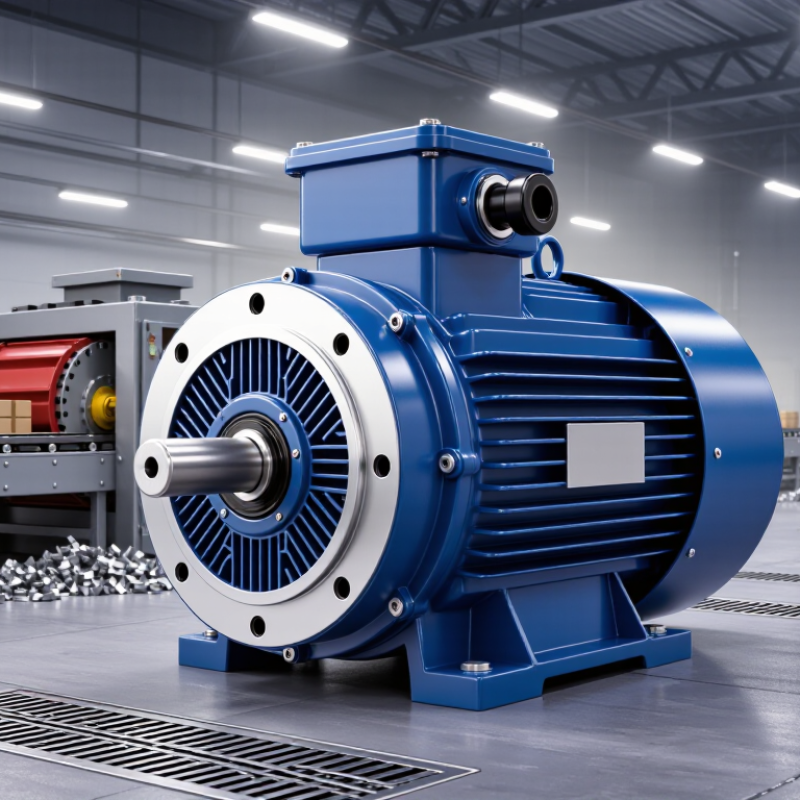
Why Choose Heavy Duty Motors for Industrial Applications?

Industrial Motor Demand: Motor Systems Use About 70% of Industrial Electricity

Why Choose Heavy Duty Motors for Industrial Applications?

Industrial Motor Demand: Motor Systems Use About 70% of Industrial Electricity

Electric motors drive pumps, fans, conveyors, compressors, and machine tools. Their electricity demand is easy to overlook because the motor is often hidden behind a guard or inside a production line. The U.S. Department of Energy’s 2014 U.S. Industrial and Commercial Motor System Market Assessment Report estimates that motor-driven systems account for about 69% of U.S. manufacturing electricity use. That figure covers systems, not motors alone.

A heavy-duty motor can suit equipment facing long operating hours, frequent starts, high loads, or dusty, hot environments. A correctly specified motor helps keep production steady and avoid avoidable downtime. But “heavy duty” is not an efficiency guarantee. It may be oversized for a light or variable load, and that can waste energy. Match the motor to the actual duty cycle, starting torque, speed control, and site conditions.

Small details matter. Check bearing temperatures, listen for changes in vibration, and keep cooling passages clear. Record operating hours and load where practical. The International Energy Agency’s report on electric motor-driven systems estimates that these systems use around 45% of global electricity, though its scope differs from the U.S. manufacturing estimate. The numbers are large, but each plant’s savings depend on its own equipment and operating profile. A careful audit may reveal that controls, maintenance, or better sizing matter as much as motor replacement. That deserves a second look.

Heavy-Duty Ratings: NEMA MG 1 Defines Motor Service-Factor Requirements

Heavy-duty motors are selected for demanding loads, but the service-factor number needs careful interpretation. NEMA MG 1 sets standard requirements for motor ratings, including service-factor conditions. The service factor is a multiplier applied to rated horsepower. A motor rated at 10 hp with a 1.15 service factor may handle 11.5 hp under specified operating conditions. That does not make 11.5 hp its ideal continuous load. Extra load can increase winding temperature and contribute to insulation wear. Heat matters.

Tips: Check the motor nameplate for service factor, rated voltage, and frequency. Compare these with the actual supply and load. Also verify ambient temperature and altitude; both can affect allowable operation. Do not choose a motor by service factor alone.

For example, a conveyor may briefly face a heavier load as material starts moving. A suitable service factor can provide some operating margin, when the motor is used within its stated conditions. But recurring overloads are a warning, not a design strategy. Review measured current and operating temperature, and consider how often peaks occur. It is tempting to treat a larger factor as extra capacity with no trade-off. That assumption is too simple. Correct sizing, appropriate controls, and routine inspection still matter for reliable service.

Efficiency Classes: IEC 60034-30-1 Classifies Motors from IE1 to IE4

Heavy-duty motors often run for long shifts, under high loads, and in dusty or hot areas. Efficiency matters because even a small loss becomes heat inside the motor and electricity costs over time. The International Energy Agency estimated that electric motor-driven systems used about 46% of global electricity in its 2011 report, Energy-Efficiency Policy Opportunities for Electric Motor-Driven Systems. The figure is broad, but it shows why motor efficiency deserves attention.

IEC 60034-30-1 defines IE efficiency classes for covered single-speed AC motors: IE1, IE2, IE3, and IE4. Higher classes indicate lower losses under specified test conditions. They do not guarantee the same savings in every installation. An IE4 motor may offer improved rated efficiency, yet an oversized motor running lightly loaded can still waste energy. Check the nameplate, operating hours, load profile, and compatibility with any variable-speed drive. Real conditions matter.

Tips: Compare efficiency at the motor’s actual operating load, not only at full load. Review temperature, vibration, and ventilation during routine inspections. These checks are useful, though they cannot replace accurate load measurements. One detail is easy to miss: a more efficient motor does not fix poor system design.

Why Choose Heavy Duty Motors for Industrial Applications? - Efficiency Classes: IEC 60034-30-1 Classifies Motors from IE1 to IE4
IEC Efficiency Class Reference Efficiency Estimated Input Power Estimated Motor Losses Industrial Relevance
IE1 — Standard Efficiency 87.0% 8.62 kW 1.12 kW Baseline comparison for this example. Higher losses mean more electrical energy is converted to heat at the same shaft output.
IE2 — High Efficiency 90.1% 8.32 kW 0.82 kW Reduces losses compared with the IE1 reference motor, which can help lower energy use during long operating hours.
IE3 — Premium Efficiency 91.7% 8.18 kW 0.68 kW Lower operating losses can reduce heat generation and support energy-conscious operation in continuously used equipment.
IE4 — Super Premium Efficiency 92.6% 8.10 kW 0.60 kW Lowest losses among these classes in this example; assess lifecycle energy savings alongside purchase price and application requirements.
Reference basis: 7.5 kW rated output, 4-pole motor, 50 Hz. Efficiency figures are IEC 60034-30-1 reference values for this rating and configuration. Input power and losses are calculated estimates at rated output using input power = output power ÷ efficiency; actual results depend on the motor and operating conditions. IE classes do not by themselves define a motor’s mechanical robustness, enclosure, or duty capability. Select a heavy-duty motor to suit the application’s load, starting frequency, environment, cooling, and required duty.

Thermal Limits: Class F Motor Insulation Has a 155°C Temperature Class

Industrial motors often run beside hot pipes, in dusty rooms, or through repeated starts that warm their windings. Class F insulation has a thermal class of 155°C. This rating describes the insulation system’s heat endurance, not a recommended ambient temperature or a promise that the motor can run continuously at 155°C. The actual winding temperature depends on load, cooling, ambient conditions, and the motor’s design.

That distinction matters. A motor driving a loaded conveyor may heat up during a long shift, especially if airflow is blocked by dust or a tight installation. Class F insulation can provide useful thermal headroom in demanding service, but it cannot compensate for undersized equipment, poor ventilation, or persistent overload. Check the manufacturer’s stated duty, temperature rise, and operating limits for the specific motor. A surface that feels only warm may not reveal the winding temperature. And insulation ages. Regular checks of current, cooling passages, and bearing condition help identify trouble before heat causes damage. Some maintenance plans still rely too heavily on touch; that is an imperfect test.

Operating Duty: IEC 60034-1 Defines Ten Duty Types, from S1 to S10

IEC 60034-1 defines ten motor duty types, from S1 to S10. They describe how load and operating time affect thermal stress. S1 means continuous operation at a steady load. S2 covers short-time operation, while S3 describes repeated cycles with rest periods. S4 and S5 also account for starting or electric braking. Later classes cover changing speeds, loads, or operating conditions. These labels matter: a motor sized only for running power may overheat during frequent starts.

For heavy-duty applications, match the duty type to the actual process. A conveyor may run steadily, while a crusher faces sharp load changes. In a pump station, repeated starts can create heat that a continuous-duty rating alone does not reveal. The International Energy Agency’s 2011 report, Energy-Efficiency Policy Opportunities for Electric Motor-Driven Systems, estimates that motor-driven systems use about 45% of global electricity. Correct duty selection supports efficient operation, but it cannot replace checks on cooling, ambient temperature, and load inertia. That part is easy to miss.

Tips: Record the load cycle, starts per hour, rest periods, and braking events before specifying a motor. Compare those details with the manufacturer’s duty rating and IEC 60034-1 definitions. Real operating cycles are often less tidy than the design sheet suggests.

Why Choose Heavy Duty Motors for Industrial Applications?

IEC 60034-1 defines ten duty types, from S1 to S10. Select a type to view a schematic of its operating sequence.

The chart illustrates the sequence of operating states, not actual load, speed, or time values. Profiles are schematic; consult the applicable IEC 60034-1 requirements when specifying a motor.

FAQS

What do IE1, IE2, IE3, and IE4 mean?

They are efficiency classes for covered single-speed AC motors. Higher classes indicate lower losses under specified test conditions. Real conditions matter.

Does an IE4 motor always use less energy in every installation?

No. An oversized motor running with a light load can still waste energy. Check the actual load and operating hours.

What should I check when comparing motor efficiency?

Review the nameplate, load profile, and compatibility with a variable-speed drive. Compare performance at the motor’s actual operating load, not just full load.

Can a more efficient motor fix a poorly designed system?

No. It may reduce motor losses, but it cannot correct poor system design. That detail is easy to overlook.

What does Class F insulation’s 155°C rating describe?

It describes the insulation system’s thermal class. It does not mean the motor should run in a 155°C room or continuously reach that temperature.

What can make a motor overheat during a long shift?

Heavy loading, blocked airflow, high ambient temperatures, and poor cooling can contribute. Dust covering ventilation passages may make the problem worse.

Is a warm motor surface a reliable way to check winding temperature?

Not by itself. Surface warmth may not reveal the winding temperature. Touch is an imperfect test.

Which routine checks can help identify motor problems?

Check current, ventilation passages, vibration, and bearing condition. These checks help, but accurate load measurements are still needed.

Conclusion

Heavy Duty Motors are designed for demanding industrial conditions where reliable operation, sustained output, and tolerance for challenging loads are essential. Since motor systems account for about 70% of industrial electricity use, choosing a motor suited to its application can influence both productivity and energy consumption. NEMA MG 1 sets service-factor requirements that help describe a motor’s capacity to handle loads beyond its rated output under specified conditions, while IEC 60034-30-1 groups motor efficiency into classes from IE1 to IE4.

Thermal capability and operating pattern are also important considerations. Class F insulation has a temperature class of 155°C, helping define the motor’s thermal limits rather than guaranteeing a particular operating temperature. IEC 60034-1 describes ten duty types, from S1 for continuous operation to S10 for operation with distinct load and speed changes. Together, these ratings help users match a motor to the demands of its equipment and working cycle.

Ethan

Ethan

Ethan is a seasoned marketing professional with a deep expertise in our company's innovative product line. With a passion for sharing knowledge and insights, he takes the lead in regularly updating our corporate blog, where he explores industry trends, product features, and effective marketing......