7 Tips for Choosing the Right Asynchronous Motors

Time:2026-10-26 Author:Liam
0%

Choosing the right Asynchronous Motors can determine whether a machine runs smoothly or quietly wastes energy. In a workshop, the difference may appear as a cooler bearing, steadier conveyor speed, or a lower monthly power bill. Yet motor selection is rarely solved by reading the nameplate alone. Load behavior, starting conditions, installation space, and maintenance access all matter.

This guide presents seven practical tips for making that decision with greater confidence. It considers rated power, torque, efficiency, voltage, speed, enclosure protection, and control compatibility. These factors sound familiar, but small oversights can create expensive problems. A motor sized only for normal load may struggle during startup. An efficient model may disappoint if its cooling system is poorly matched to a dusty room. Field experience teaches a simple lesson: specifications must fit the application, not merely look impressive on paper.

There is room for judgment. Calculations can be accurate, yet operating conditions may change after installation. Seasonal temperatures, voltage fluctuations, and irregular production cycles deserve attention. Consult qualified engineers, verify manufacturer data, and compare tested performance where possible. Do not rely on assumptions. A careful choice should support safety, durability, controllability, and reasonable lifecycle cost. The best answer is not always the largest motor or the cheapest quote. It is the one that performs reliably under real working conditions, while leaving enough practical room for maintenance and future needs.
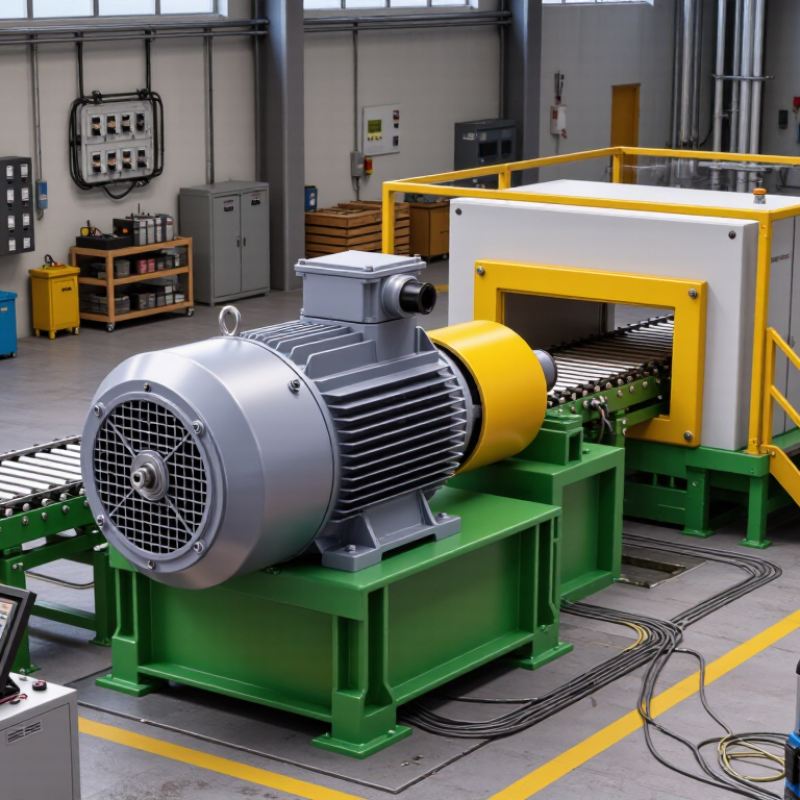
7 Tips for Choosing the Right Asynchronous Motors

Asynchronous Motor Fundamentals: Slip, Torque, and 50/60 Hz Operation

Choosing an asynchronous motor starts with slip, torque, and frequency.

The rotor never reaches synchronous speed. Slip creates the relative motion that produces torque. At 50 Hz, a four-pole motor has a synchronous speed of 1,500 rpm. At 60 Hz, it reaches 1,800 rpm before slip. Actual speed is lower.

Check seven practical points:

load torque
starting torque
rated speed
slip
frequency
voltage
duty cycle

A pump may tolerate modest starting torque. A conveyor may not. Low slip often improves speed stability, but it does not automatically mean better performance. Thermal limits still matter. Keep that in mind.

The International Energy Agency estimated that electric motor systems used about 53% of global electricity in its Energy Efficiency 2017 analysis.

Small efficiency gains can therefore produce meaningful savings. The U.S. Department of Energy also reports that motor-driven equipment represents a major share of industrial electricity use. These figures support careful selection, not guesswork. A 50 Hz motor operated at 60 Hz can run faster and alter torque behavior. The reverse change may reduce speed and cooling. Frequency converters help, but settings must match the motor’s voltage, insulation, and load profile. I once underestimated acceleration demand on paper; real inertia proved less forgiving. Test the full operating range whenever possible.

Step 1: Match Rated Power, Torque, and S1 Duty to the Load

When choosing an asynchronous motor, match its rated power and torque to the real load. Rated power alone is not enough. A conveyor may need modest power while starting, then higher torque when fully loaded. Check both starting torque and running torque against the load curve. A motor that looks adequate on a nameplate can still stall during acceleration.

S1 duty means continuous operation at a constant load until thermal stability is reached. This rating matters when a pump, fan, or compressor runs for hours without stopping. Confirm the motor’s rated power under the actual ambient temperature, installation height, cooling method, and supply frequency. Small details matter. A hot, poorly ventilated enclosure can reduce usable output.

In practical selection work, I compare measured load current with the expected torque profile, not just the catalog value. For changing loads, calculate an equivalent or RMS torque where appropriate. Leave a sensible margin, but avoid choosing an excessively large motor. Oversizing can increase cost, starting stress, and light-load inefficiency. I once treated a short overload as unimportant; later testing showed repeated starts were heating the motor more than expected. Recheck the duty cycle. Real machines are rarely as steady as the original estimate.

Step 2: Compare IE3 and IE4 Efficiency Under IEC 60034-30-1

IEC 60034-30-1 classifies asynchronous motors by measured efficiency, including IE3 and IE4. The comparison must use the same rated power, speed, frequency, and operating point. Otherwise, the numbers can mislead.

IE4 motors generally lose less energy than IE3 models. The difference may appear small on a datasheet, often around one to several percentage points. Yet a 75 kW motor running 6,000 hours yearly can waste substantial electricity through tiny efficiency losses. The International Energy Agency reports that electric motor systems consume roughly half of global electricity. Small improvements therefore scale quickly across factories.

Check the test values, not only the efficiency label. IEC 60034-30-1 defines the classification, while IEC 60034-2-1 supports efficiency measurement methods. Ask for test tolerances and efficiency at partial load. That detail matters. Many motors rarely operate at full load.

In field assessments, I would compare annual energy cost, starting current, variable-speed performance, and installation space. IE4 may need different control settings or create a longer payback period. IE3 can still be practical when operating hours are low. However, this assumption needs evidence from your load profile. The U.S. Department of Energy’s Motor Systems Sourcebook highlights system-level losses, including transmission, controls, and poor sizing. A highly efficient motor cannot fix an oversized pump or a badly adjusted drive. I would record real operating hours for several weeks before choosing. Perfect data is unlikely, but better data prevents an expensive guess.

7 Tips for Choosing the Right Asynchronous Motors – Step 2: Compare IE3 and IE4 Efficiency Under IEC 60034-30-1

The chart compares the nominal minimum efficiency limits for three-phase, 4-pole, 50 Hz squirrel-cage induction motors classified as IE3 and IE4 under IEC 60034-30-1. IE4 generally delivers lower operating losses, although actual efficiency depends on the motor design, load, speed, and operating conditions.

Efficiency values shown are percentage limits from the IEC 60034-30-1 efficiency-class framework for selected rated powers. Always verify the applicable edition, motor pole count, frequency, and rated operating point before specification.

Step 3: Check Voltage, Frequency, Speed, and Typical 1–5% Slip

7 Tips for Choosing the Right Asynchronous Motors

Step 3

Check Voltage, Frequency, Speed, and Typical 1–5% Slip

Voltage and frequency must match the available supply. A motor rated 400 V at 50 Hz may overheat on a mismatched system. IEC 60034-1 defines key rating conditions, including voltage and frequency tolerances. Check the nameplate, panel readings, and starting method before ordering. The IEA reports that electric motor systems consume roughly half of global electricity, so small selection errors can become expensive.

Tip: Calculate speed, do not guess. Synchronous speed follows ns = 120f/p, where f is frequency and p is pole count. A four-pole motor reaches 1,500 rpm at 50 Hz before load is applied. Its actual speed may be about 1,425–1,485 rpm because of slip. Many industrial asynchronous motors show 1–5% slip, depending on design, load, and rated power. This range is typical, not universal.

A practical check is to compare rated speed with the machine’s required speed. I have seen pumps selected by nominal rpm alone, causing poor flow and unnecessary vibration. Recheck operation at full load. Slip increases as torque demand rises, while voltage imbalance can increase heating. The U.S. Department of Energy’s motor-system guidance recommends measuring operating conditions rather than relying only on catalog values. I sometimes overlook frequency converters during early checks. That is a costly mistake. Confirm whether the drive changes frequency, voltage, or both.

Step 4: Select IP Rating, Cooling Method, Power Factor, and Starting Type

When selecting an asynchronous motor, begin with the environment around it. An IP rating describes protection against dust and water entry. A dusty workshop may need stronger enclosure protection than a clean indoor room. However, a higher rating is not automatically better. It can restrict heat release and increase cost. Check the actual exposure, cleaning routine, and installation position.

Cooling method also deserves practical attention. Totally enclosed motors often suit dirty areas because their internal windings stay isolated. Open designs can cool efficiently in clean, ventilated spaces. Measure the surrounding temperature, airflow, and available clearance. A motor placed against a wall may run hotter than its catalog conditions suggest. I once underestimated this detail. The motor worked, but its service life suffered.

Power factor affects electrical efficiency and system capacity. Select a motor that matches the load, not merely the highest available rating. Starting type matters when equipment begins under heavy load. Direct-on-line starting is simple, but it can create a large current surge. Star-delta, soft-start, or variable-speed starting may reduce that stress. Check starting torque carefully. A gentle start is useless if the conveyor cannot move. Consult measured load data when possible, and question assumptions based only on old equipment. Specification sheets help, but site conditions usually decide the outcome.

Step 5: Verify VFD Compatibility, Installation Limits, and IEC 60034 Compliance

Step 5: Verify VFD Compatibility, Installation Limits, and IEC 60034 Compliance

A motor can look suitable and still fail under variable-frequency-drive operation. The U.S. Department of Energy reports that motor-driven equipment consumes about 70% of industrial electricity. Small compatibility errors can therefore create large energy and maintenance costs. Confirm the motor’s insulation system supports inverter pulses, including the specified dV/dt and peak-voltage limits. Check the allowable cable length, because long cables can amplify reflected-wave stress. Bearing-current protection also deserves attention. It is often forgotten.

Review the complete drive-motor combination, not the nameplate alone. Confirm continuous torque at low speed, cooling performance, overload capacity, braking duty, and permitted starts per hour. Installation limits should include ambient temperature, altitude, enclosure rating, mounting position, vibration, and minimum operating speed. IEC 60034-1 defines rating and performance requirements, while IEC 60034-2-1 addresses efficiency and losses. IEC 60034-5 covers enclosure protection, and IEC 60034-9 addresses noise. These details matter on a hot factory floor.

Do not rely on a generic “VFD-ready” label. Ask for test conditions and documented limits. The IEA has estimated that electric motor systems consume roughly 46% of global electricity, so verification has practical value. In field work, I have seen commissioning teams check frequency range but miss cooling below 30 hertz. That mistake is understandable, but expensive. A spreadsheet can still lie. Recheck assumptions against the actual load, cable route, and installation environment.

FAQS

How should IE3 and IE4 motor efficiency be compared?

Compare identical power, speed, frequency, and operating points. IE4 usually wastes less energy than IE3. Small percentage differences can become large over 6,000 yearly operating hours.

Why should I check test values instead of efficiency labels?

Labels show classes, but test values reveal actual performance. Request measurement methods, tolerances, and partial-load efficiency. Many motors rarely operate at full load.

Can an IE3 motor still be a practical choice?

Yes, especially with short operating hours or a long IE4 payback period. Check real load data first. My initial assumption might be wrong without several weeks of records.

What supply details must match the motor?

Confirm voltage, frequency, phase, and starting method. A 400-volt, 50-hertz motor may overheat on a mismatched supply. Check the nameplate and panel readings.

How is asynchronous motor speed calculated?

Synchronous speed follows nₛ = 120f/p. A four-pole motor reaches 1,500 rpm at 50 hertz without load. Actual speed may fall to about 1,425–1,485 rpm.

What does motor slip mean?

Slip is the speed difference between synchronous and actual rotor speed. Many industrial motors show roughly 1–5% slip. Higher torque demand usually increases slip.

What should be checked before using a motor with a variable-frequency drive?

Confirm inverter-duty insulation, dV/dt limits, peak voltage, cable length, and bearing-current protection. Check low-speed cooling, continuous torque, overload capacity, and braking duty. “Ready” may not mean fully suitable.

Which installation conditions can affect motor performance?

Review ambient temperature, altitude, enclosure protection, mounting position, vibration, noise, and minimum speed. Long cables can increase reflected-wave stress. A spreadsheet can still lie. Recheck the actual site.

Conclusion

Choosing the right Asynchronous Motors begins with understanding how slip, torque, and 50/60 Hz operation affect performance. Start by matching the motor’s rated power and torque to the actual load, while confirming that its S1 continuous-duty rating suits the application. Efficiency is also important: compare IE3 and IE4 classes according to IEC 60034-30-1 to balance energy savings and operating costs.

Next, verify voltage, frequency, speed, and the expected typical slip of approximately 1–5%. Consider the required IP protection rating, cooling method, power factor, and starting type based on the installation environment and load characteristics. If speed control is needed, confirm VFD compatibility, insulation requirements, installation limits, and compliance with relevant IEC 60034 standards. A complete evaluation of these factors helps ensure reliable starting, stable operation, efficient energy use, and a suitable service life without unnecessary oversizing or performance compromises.

Liam

Liam

Liam is a dedicated marketing professional with a profound expertise in the industry, where he excels at highlighting the unique advantages of our core products. With a keen understanding of market trends and consumer needs, Liam frequently updates our company’s professional blog, providing......