China has become a significant sourcing base for Synchronous Motors, serving factories, infrastructure projects, compressors, pumps, and precision production lines worldwide. Its supplier landscape includes established manufacturers, specialized exporters, and smaller plants with uneven documentation. That difference matters.
The IEA 4E Electric Motor Systems Annex reports that motor-driven systems consume approximately half of global electricity. The IEA Electricity 2024 report also projects global electricity demand growth of about 3.4% annually from 2024 to 2026. These figures make efficiency more than a purchasing preference. They make it an operating-cost decision.
Professor Bimal K. Bose, a widely recognized motor-drive and power-electronics authority, wrote, “Power electronics is the technology of the future.” His observation remains practical for modern Synchronous Motors, especially permanent-magnet designs paired with variable-frequency drives. However, efficiency claims should not stand alone.
A reliable China supplier should provide IEC 60034 test data, efficiency-class evidence, rotor-balance records, insulation details, and clear duty-cycle ratings. Buyers should also verify torque curves, starting performance, enclosure protection, cooling methods, and after-sales support. A polished catalogue is not proof.
Field experience often reveals the gap. A motor may meet its rated efficiency in a laboratory, yet perform differently under dust, heat, voltage fluctuation, or frequent starts. That reality deserves more attention.
This guide examines leading Chinese Synchronous Motors suppliers through technical capability, certification quality, customization experience, delivery discipline, and export support. It also considers an uncomfortable issue: the lowest quoted price can become expensive when testing, spare parts, or engineering communication is weak. Reliable comparison requires evidence, not impressive promises.
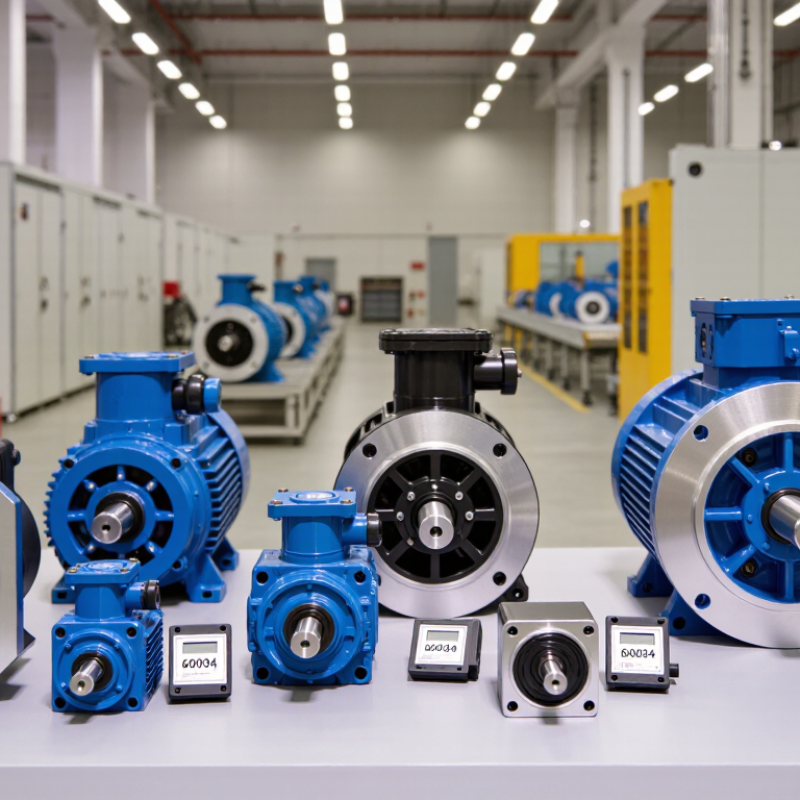
Synchronous motors run at a speed fixed by supply frequency and pole count. At 50 Hz, a four-pole motor reaches 1,500 rpm. At 60 Hz, it reaches 1,800 rpm. There is no normal slip. This supports accurate speed control in pumps, compressors, conveyors, and large fans. However, the motor must match the local grid or drive settings. A 50 Hz design should not be connected casually to a 60 Hz system.
Voltage selection also matters. Industrial systems commonly use 380–690 V, depending on power rating and installation standards. Higher voltage can reduce current and cable losses, but insulation, switching equipment, and protection must be suitable. During commissioning, technicians should verify phase sequence, starting current, load torque, and actual operating frequency. Small errors become expensive.
Efficiency classes IE4 and IE5 indicate lower motor losses under defined testing conditions. They do not guarantee identical savings at every load. A motor running far below its rated point may perform differently. This is often overlooked. Buyers should request test data, efficiency curves, temperature-rise values, and applicable standards. Cooling design also deserves attention, especially in dusty factories or warm machine rooms. A clean datasheet is useful, but it cannot replace site measurements. Sometimes, the better choice is not the highest efficiency class, but the correctly sized motor with stable control and serviceable components.
China’s leading synchronous motor suppliers serve a wide power spectrum, from compact 1 kW drives to 10 MW industrial machines.
At 1–30 kW, suppliers often emphasize permanent-magnet efficiency, quiet operation, and flexible mounting. These motors suit pumps, conveyors, compressors, and automated equipment.
From 37 kW to 500 kW, buyers usually compare thermal margins, insulation systems, starting methods, and inverter compatibility. A higher nameplate rating does not automatically mean better performance. Real duty cycles matter.
Medium-voltage units, commonly rated from 500 kW to several megawatts, demand deeper engineering review. Suppliers may provide air-cooled or water-cooled designs, depending on load and installation conditions.
A 2 MW motor running near full load needs different cooling attention than one used intermittently. For 5–10 MW projects, factory testing, rotor balancing, vibration limits, protection settings, and commissioning support become important decision points.
Buyers should request test records, drawings, efficiency curves, and documented material specifications. Claims without records deserve questions.
Tips:
Compare continuous, short-time, and peak ratings separately. Ask how efficiency was measured and under which standard.
Inspect winding data, bearing design, and spare-parts availability. A site visit can reveal more than a polished quotation.
I would also check whether the supplier has built motors for similar voltage and load profiles. This step is easy to skip, and costly to regret.
A ≥0.95 power factor should be a screening threshold, not a marketing claim. The International Energy Agency reported that electric motor systems consume roughly 53% of global electricity. Small efficiency gains therefore matter across factories, pumps, compressors, and conveyor lines.
Ask suppliers for witnessed test records at rated voltage, frequency, load, and temperature. Verify power factor at 25%, 50%, 75%, and 100% load. A motor may reach 0.96 at full load, yet fall sharply during partial-load operation. That detail can change operating costs.
IEC 60034 compliance requires careful document review. Check declared ratings, temperature-rise limits, insulation class, efficiency testing, and routine inspection procedures. IEC 60034-30-1 defines motor efficiency classes, but it does not automatically guarantee a ≥0.95 power factor. Buyers should request calibrated instruments and traceable laboratory reports. The U.S. Department of Energy also identifies motor-driven equipment as a major industrial electricity user, supporting stricter supplier assessment. A spreadsheet is not enough. Site verification remains imperfect, especially when test conditions differ from actual duty cycles. I would also compare acoustic readings, vibration values, terminal markings, and warranty response times before approval.
China Top Synchronous Motors Suppliers for Global Buyers
Synchronous motors support pumps, compressors, and conveyors where stable speed matters. Their rotors follow the rotating magnetic field with minimal slip. This helps maintain process consistency and can improve power-factor performance. In water systems, a 6- or 8-pole motor may deliver steady torque at moderate speed. Compressors often require carefully matched 2- or 4-pole drives for higher operating speeds. Conveyor systems may use 8- to 20-pole designs when low-speed torque and controlled movement are more important.
Tips: Confirm voltage, frequency, duty class, insulation system, enclosure rating, and shaft dimensions before requesting quotations. Ask suppliers for routine test records, efficiency data, vibration limits, and temperature-rise results. A supplier with export experience should explain documentation clearly, not only provide a low price. Request drawings early. Small mounting differences can delay installation.
Pole selection is not simply a catalog decision. Load curves, starting conditions, inverter use, and operating hours all affect the result. For example, a 20-pole motor can reduce mechanical speed, but it may require a larger frame and careful cooling design. Field experience shows that buyers sometimes overlook ambient temperature and altitude. That mistake can weaken expected performance. Independent inspection may be worthwhile for large orders, although it adds time and cost. Reliable communication remains essential when specifications change across languages and standards.
| Key Industry | Typical Duty | Common Pole Range | Synchronous Speed at 50 Hz | Typical Motor Output | Starting / Control Method | Preferred Cooling and Protection | Typical Efficiency Target | Buyer Qualification Priorities |
|---|---|---|---|---|---|---|---|---|
| Centrifugal Pumps | Water supply, cooling water, irrigation, municipal and process-fluid pumping | 4–12 poles | 1,500–500 rpm | 75–2,500 kW | Across-the-line for smaller ratings; soft starter or variable-frequency drive for larger systems | TEFC or enclosed air-to-air cooling; IP55 or higher for industrial installations | IE3 or better, subject to motor type and operating point | Stable operation near rated load, low vibration, wet-environment protection, and compatibility with pump duty curves |
| Reciprocating and Centrifugal Compressors | Air separation, refrigeration, petrochemical, natural-gas and industrial-gas compression | 2–6 poles | 3,000–1,000 rpm | 500–10,000 kW | Damper winding, reduced-voltage starting, or variable-frequency drive; starting torque must match compressor inertia | Open or enclosed air-to-air cooling; bearing and winding temperature monitoring commonly required | IE3–IE4 class performance where available for the selected design | High short-time overload capability, torsional analysis, vibration limits, and process-area environmental requirements |
| Belt and Overland Conveyors | Mining, aggregates, cement, ports, power plants and bulk-material handling | 6–20 poles | 1,000–300 rpm | 250–5,000 kW per drive | Variable-frequency drive, controlled ramp-up, and load-sharing control for multiple drive systems | TEFC or totally enclosed water-to-air cooling; IP55–IP66 depending on dust and outdoor exposure | IE3 or better, with high efficiency maintained across the normal operating range | High pull-out torque, low-speed thermal performance, shaft-grounding provisions, and mechanical robustness |
| 2-Pole High-Speed Drives | High-speed pumps, fans, compressors and turbine-driven auxiliary systems | 2 poles | 3,000 rpm | 75–5,000 kW | Direct starting for suitable grids; variable-frequency drive for speed control and process optimization | TEAAC or water-cooled construction for high-power applications; enhanced bearing monitoring | IE3–IE4 class performance depending on rated speed and design | Rotor mechanical integrity, overspeed margin, balancing quality, critical-speed separation and vibration testing |
| 4-Pole General Industrial Drives | Fans, pumps, mixers, compressors, extruders and general process machinery | 4 poles | 1,500 rpm | 30–3,000 kW | Across-the-line, soft starter or variable-frequency drive | TEFC, IP55–IP66; insulated bearings may be specified for inverter-fed operation | IE3 or higher for qualifying industrial motor ranges | Voltage and frequency flexibility, service factor, bearing life, noise, vibration and maintenance access |
| 6-Pole Medium-Speed Drives | Large pumps, fans, compressors, crushers and heavy process equipment | 6 poles | 1,000 rpm | 250–6,000 kW | Reduced-voltage starting or variable-frequency drive; damper winding commonly used for starting | Enclosed air-to-air or water-to-air cooling; RTDs for stator and bearing temperature measurement | IE3–IE4 class performance according to the selected rating and operating profile | Starting current, acceleration time, low-speed cooling, coupling alignment and continuous-duty thermal margin |
| 8–12-Pole Low-Speed Drives | Large-volume pumps, induced-draft fans, mills, crushers and slow conveyors | 8–12 poles | 750–500 rpm | 500–8,000 kW | Variable-frequency drive or controlled reduced-voltage starting | Water-to-air or forced-air cooling; bearing insulation and online condition monitoring may be required | Application-specific; efficiency must be evaluated at the actual low-speed load point | Thermal dissipation at low speed, high torque capability, torsional behavior and mechanical resonance control |
| 16–20-Pole Very Low-Speed Drives | Slow conveyors, large fans, mixers, hoists and specialized process equipment | 16–20 poles | 375–300 rpm | 500–10,000 kW | Variable-frequency drive with controlled acceleration and torque regulation | Forced-air, water-to-air or water-cooled construction; heavy-duty bearings and temperature sensors | Project-specific efficiency and power-factor evaluation recommended | Low-speed torque, cooling capacity, rotor dynamics, starting sequence, installation footprint and spare-parts support |
For global buyers, a synchronous motor supplier should provide evidence, not optimistic claims. The IEA’s Electric Motor-Driven Systems report estimates that motor systems consume 43–46% of global electricity. Efficiency testing therefore deserves serious attention. Request efficiency, power factor, speed stability, temperature rise, vibration, noise, insulation resistance, and dielectric strength results. Test it twice. Ask whether readings came from a calibrated laboratory or an internal bench.
Check compliance against IEC 60034-1 and IEC 60034-2-1 where applicable. Request the test method, sample number, serial traceability, and certificate validity. ISO 9001 registration supports process control, but it does not prove every motor meets your specification. Market access may also require region-specific conformity documentation. The U.S. Department of Energy’s Industrial Decarbonization Roadmap identifies motor-driven equipment as a major industrial energy concern, making transparent efficiency data commercially important.
Lead times should separate engineering approval, sample production, and mass production. A quoted “30 days” can hide component shortages or testing delays. Confirm production capacity, inspection gates, packaging, spare parts, and the remedy for failed samples. Negotiate MOQ terms carefully. A low MOQ may increase unit cost, while a high MOQ can trap working capital. Request one prototype, a small pilot lot, and a written ramp-up schedule. This checklist is useful, but not perfect; load profiles and installation conditions can still change field performance. Do not guess.
Speed depends on supply frequency and pole count. At 50 Hz, a four-pole motor runs near 1,500 rpm. At 60 Hz, it runs near 1,800 rpm. There is normally no slip. Check frequency carefully.
Not casually. Different frequency changes motor speed, torque, cooling, and operating conditions. Confirm the motor rating and drive settings before connection. A small mismatch can become expensive.
Industrial systems often use 380–690 V. Higher voltage can reduce current and cable losses. Insulation, switching equipment, and protection must match the voltage. Verify phase sequence during commissioning.
No. These efficiency classes describe lower losses under defined test conditions. A motor running at 25% load may perform differently. Request efficiency curves, temperature-rise values, and test records. The highest class is not always best.
A power factor near 0.95 or higher is a useful screening point. Do not accept one full-load figure alone. Request readings at 25%, 50%, 75%, and 100% load. Partial-load performance may drop sharply.
They suit pumps, compressors, conveyors, and large fans. Pumps may use six- or eight-pole designs for moderate speed. Compressors often need two- or four-pole motors. Conveyors may need eight to twenty poles. Load curves still decide.
Confirm voltage, frequency, duty class, insulation, enclosure rating, and shaft dimensions. Request drawings early. Also check vibration, noise, cooling, temperature rise, and routine test records. A small mounting difference can delay installation.
Request traceable test reports at rated voltage, frequency, load, and temperature. Review declared ratings and applicable motor standards. Compare warranty response times and technical communication. Independent inspection may help for large orders. It adds time and cost. A low price alone proves little.
Synchronous Motors are a reliable solution for applications requiring stable speed, high efficiency, and accurate power performance. Designed for 50/60 Hz systems and commonly available in 380–690 V configurations, modern models can achieve IE4–IE5 efficiency levels while supporting power ratings from 1 kW to 10 MW. China’s leading suppliers typically offer a broad range of designs for pumps, compressors, conveyors, and other 2–20 pole drive systems.
When comparing suppliers, global buyers should assess power factor performance, with a target of at least 0.95, as well as compliance with IEC 60034 requirements. Careful evaluation should also include factory testing, efficiency verification, insulation and temperature-rise reports, applicable certifications, production capacity, lead times, after-sales support, and minimum order quantity terms. A clear technical specification and inspection plan can help buyers select dependable equipment that balances operating efficiency, delivery reliability, and long-term maintenance needs.

Zelt Motor