Choosing the right Custom Motors can shape a machine’s efficiency, service life, and total operating cost. Global buyers rarely need the same motor design. A compact BLDC motor may suit a medical pump, while a high-torque geared motor may better support warehouse equipment. Servo motors offer precise movement for robotics and packaging lines. Induction motors remain practical for stable industrial applications. The best option depends on load, speed, duty cycle, installation space, noise limits, and environmental conditions.
In real purchasing projects, specifications often look clearer than they are. A motor rated for high power may still perform poorly under frequent starts or sudden loads. That assumption can fail. Experienced buyers usually request torque curves, thermal data, insulation details, efficiency tests, and sample evaluations before placing large orders. They also examine the manufacturer’s production records, quality controls, warranty terms, and after-sales response. Reliable suppliers should explain testing methods clearly, not hide behind impressive catalog numbers.
No shortlist is perfect. Cost pressure can tempt buyers to overlook serviceability or spare-part access. This choice may become expensive later. A trustworthy evaluation compares performance, integration risks, delivery stability, and documented compliance for the target market. Supplier visits, prototype testing, and field feedback can reveal issues that brochures miss. This guide examines leading Custom Motors for global buyers, with practical attention to technology, application fit, supplier credibility, and long-term value. The goal is not to name one universal winner, but to help each buyer make a defensible and informed decision.
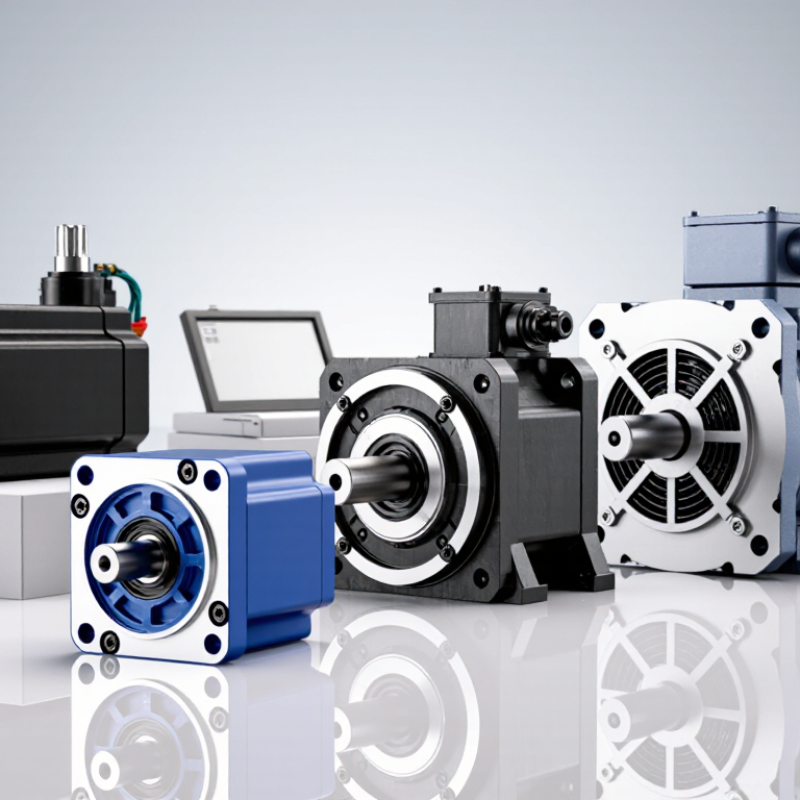
A custom motor is an electric motor designed around a specific machine, load, and operating environment. It may change standard features, such as torque, voltage, speed, shaft size, cooling, or mounting dimensions. The goal is not novelty. The goal is dependable performance where an off-the-shelf motor falls short.
Custom motors support global buyers facing different power systems, climates, and production requirements. A motor for a food-processing line may need smooth surfaces and frequent washdown protection. A warehouse vehicle may require high starting torque and repeated braking cycles. Buyers in hot regions may also need stronger insulation and improved heat dissipation. These details affect service life, energy use, and maintenance costs.
Good sourcing depends on measurable evidence. Engineers should review load profiles, duty cycles, efficiency data, test reports, drawings, and material specifications. Regional electrical requirements also deserve careful checking. Documentation can prevent costly misunderstandings between factories, integrators, and distributors. In practice, a short technical meeting often reveals more than a long product list.
Custom does not always mean better. It can increase tooling costs, lead times, and replacement complexity. Some designs become too specialized. That is a real risk. A careful buyer should question every requested feature and compare it with the machine’s actual needs. I have seen projects focus heavily on peak power while overlooking noise, heat, and future maintenance. That choice may work initially, but field conditions often expose the weakness.
What Are the Top Custom Motors for Global Buyers?
International buyers can choose from several custom motor types, depending on load, speed, space, and control requirements. Brushed DC motors suit compact equipment with simple speed control and limited operating cycles. They are cost-effective, but brush wear can increase maintenance needs. Brushless DC motors offer quieter operation, longer service life, and better efficiency. They work well in pumps, fans, medical devices, and battery-powered systems.
Servo motors provide precise position, speed, and torque control. They are common in robotics, packaging equipment, and automated production lines. Stepper motors offer accurate movement without complex feedback systems, although they may lose torque at higher speeds. Gear motors combine a motor with a gearbox to produce stronger output torque. This option is useful for conveyors, adjustable seats, and small lifting mechanisms.
AC induction motors remain practical for industrial machinery and continuous operation. Custom versions can match regional voltage, frequency, insulation, and mounting standards. Linear motors support direct movement without belts or screws, but their installation can be more demanding. Fit matters. Shaft dimensions, connector types, cooling paths, and duty cycles require careful checking. A specification can still be wrong. Buyers should request performance curves, material details, testing records, and compliance documents before approving samples. I have seen projects slow down because the motor met the power target but failed under heat, vibration, or repeated starts.
Comparing custom motors starts with the working load, not the advertised peak speed. Measure continuous torque, starting torque, speed range, and acceleration under real conditions. A motor that reaches 8,000 rpm may struggle with a heavy load at low speed. That mismatch creates heat, vibration, and early wear. Numbers need context.
Thermal performance deserves close attention. Ask for winding temperature data at the intended duty cycle, voltage, and ambient temperature. Check the cooling method, insulation class, bearing design, and allowable overload time.
In practical testing, a motor may perform well on a bench but lose torque inside a sealed enclosure. Heat wins. Efficiency also matters, especially for battery-powered equipment. Small percentage losses become meaningful during long operating shifts.
Noise, vibration, ingress protection, and control compatibility can separate a reliable design from an expensive disappointment. Request test results at several speeds, not only at the preferred operating point. Review dimensional drawings, connector details, balancing tolerances, and maintenance requirements. Independent verification is valuable when supplier data lacks test conditions. A common mistake is choosing the lightest motor before checking service life. I have seen compact designs require larger cooling systems, which erased the expected weight savings. Global buyers should also confirm voltage options, documentation quality, replacement support, and consistency between sample units and production units. One prototype is not proof. Ask difficult questions early.
Custom motors are selected by duty, not by geography alone. In North America, buyers often specify NEMA-frame compatibility, high starting torque, and serviceable bearings for pumps, compressors, conveyors, and mining equipment. The U.S. Department of Energy reports that motor-driven equipment can consume more than 70% of industrial electricity. This makes efficiency, heat control, and reliable maintenance important purchasing criteria.
European buyers usually focus on compact designs, documented efficiency, and compliance with Ecodesign requirements. IEC 60034-30-1 defines international motor efficiency classes, including IE3, IE4, and IE5. A tailored permanent-magnet motor may suit HVAC fans or automated production lines, especially where variable-speed operation reduces energy waste. However, efficiency ratings alone can mislead. Drive losses, operating temperature, and partial-load performance also matter.
In China and other Asian manufacturing centers, custom motors commonly serve robotics, textile machinery, water treatment, and high-volume production equipment. Buyers may require local testing documents, corrosion protection, quiet operation, and short replacement cycles. The International Energy Agency identifies electric motor systems as responsible for roughly half of global electricity use. That figure changes the conversation. Buyers now compare lifetime energy cost, not only purchase price. A perfect specification is rare. Engineers still need to question overload assumptions, ambient conditions, and actual duty cycles before approval. Small details matter.
Industry applications and regional buyer requirements based on common industrial motor specifications.
Industrial buyers commonly request customized motors for pumps, fans, compressors, conveyors, machine tools, and electric vehicles. Regional differences mainly reflect grid frequency, supply voltage, environmental protection, efficiency regulations, and the need for variable-speed control. Typical industrial three-phase supplies are 50 Hz in most of Europe and Asia and 60 Hz in North America, while voltage and certification requirements vary by country.
Global buyers often need more than a standard motor. A custom motor must match voltage, speed, torque, shaft size, noise limits, and working temperature. The best design depends on the application, not a sales brochure. BLDC motors suit compact equipment, while servo motors support precise movement. AC motors remain practical for many industrial systems.
A reliable custom motor manufacturer should provide clear engineering evidence. Ask for drawings, tolerance data, load curves, insulation details, and thermal test results. Request a working sample before approving mass production. The sample should run under realistic conditions, not only on a clean laboratory bench. Check whether the manufacturer can manage different voltages, frequencies, connectors, and safety requirements for each market.
Factory experience matters. Review production equipment, quality records, material traceability, and final inspection procedures. Engineers should explain failures honestly and suggest workable changes. Fast replies are useful, but technical accuracy matters more. I have found that vague promises often hide weak testing. No supplier is perfect. Even a careful team may overlook a mounting detail or unusual duty cycle. Keep written specifications, approval points, and warranty terms. Visit the facility when possible, or request live video evidence of testing. A dependable partner accepts questions, documents changes, and keeps the approved sample as a production reference.
| Custom Motor Type | Typical Power Range | Typical Speed Range | Typical Efficiency | Key Advantages | Common Global Applications | Important Customization Options | Reliability Checks for Buyers | Overall Suitability |
|---|---|---|---|---|---|---|---|---|
| Brushless DC Motor (BLDC) | Several watts to approximately 10 kW, depending on construction and cooling | Approximately 1,000–30,000 rpm; lower speeds are possible with gearing | Typically 70%–90% in properly matched systems | High power density, long service life, low maintenance, and good speed control | Fans, pumps, medical equipment, robotics, power tools, automotive auxiliaries, and compact appliances | Winding design, shaft geometry, sensor or sensorless control, magnets, bearings, thermal protection, connector type, and ingress protection | Check winding consistency, rotor balance, bearing life, thermal testing, acoustic testing, controller compatibility, and endurance test records | Excellent for compact, efficient, and high-volume customized products |
| Permanent Magnet Synchronous Motor (PMSM) | Approximately 100 W to hundreds of kilowatts | Application-dependent; commonly 500–6,000 rpm in industrial systems | Often above 90% at rated operating points when correctly designed | High efficiency, high torque density, quiet operation, and precise control | Industrial automation, compressors, electric mobility, HVAC systems, and energy-efficient machinery | Magnet grade, rotor topology, lamination design, winding layout, encoder, cooling method, and inverter parameters | Verify demagnetization resistance, insulation class, vibration results, temperature-rise data, efficiency maps, and drive-system validation | Excellent for energy-sensitive and high-performance equipment |
| AC Induction Motor | Approximately 100 W to several megawatts | Typically 750–3,600 rpm at 50/60 Hz, with speed varying under load | Commonly 75%–95%, depending on size and load | Robust construction, broad supply availability, good overload tolerance, and no permanent magnets | Pumps, conveyors, compressors, machine tools, fans, and general industrial equipment | Voltage and frequency, enclosure, mounting, shaft, brake, cooling system, duty cycle, insulation, and variable-frequency-drive compatibility | Review insulation-system testing, locked-rotor performance, temperature rise, vibration, efficiency class, and protection rating | Excellent for durable industrial systems and global serviceability |
| Brushed DC Motor | Approximately 1 W to several kilowatts | Commonly 1,000–20,000 rpm, depending on voltage and load | Typically 60%–85% | Simple control, high starting torque, easy direction reversal, and economical electronics | Small pumps, actuators, toys, office equipment, automotive mechanisms, and portable devices | Brush material, commutator design, winding, gear reduction, shaft, voltage, suppression components, and life rating | Check brush life, commutator wear, electromagnetic compatibility, stall performance, noise, thermal limits, and cycle testing | Good for cost-sensitive products with moderate operating hours |
| Stepper Motor | Approximately 1 W to 1 kW | Commonly 100–2,000 rpm; usable torque decreases as speed increases | Often 50%–80%, depending on operating mode and load | Accurate incremental positioning, high holding torque, and simple open-loop control | Printers, packaging machinery, laboratory equipment, CNC systems, valves, and positioning stages | Step angle, phase count, winding current, shaft configuration, encoder, gearbox, brake, and connector layout | Verify torque-speed curves, resonance behavior, missed-step performance, insulation, bearing quality, and positioning repeatability | Excellent for economical positioning applications with predictable loads |
| Servo Motor | Approximately 50 W to hundreds of kilowatts | Typically 1,000–6,000 rpm, with application-specific higher-speed designs | Often 80%–95% in a properly matched motor-and-drive system | Closed-loop accuracy, fast dynamic response, high overload capability, and controlled torque | Robotics, semiconductor equipment, packaging, printing, machine tools, and automated production lines | Encoder resolution, torque constant, inertia matching, brake, winding, cooling, shaft, feedback protocol, and drive tuning | Assess position accuracy, repeatability, overload tests, encoder reliability, thermal cycling, vibration, and complete system commissioning | Excellent for precision motion and demanding automation |
| Coreless or Slotless Motor | Approximately 1 W to 500 W | Commonly 2,000–50,000 rpm, depending on design and cooling | Typically 70%–90% | Low rotor inertia, fast acceleration, smooth torque, and reduced cogging | Medical devices, optical instruments, miniature pumps, drones, and precision actuators | Coil geometry, magnet design, commutation method, shaft, bearing system, balancing, thermal path, and miniature connectors | Check acceleration testing, rotor balance, coil temperature, bearing life, electromagnetic compatibility, and dimensional consistency | Excellent for lightweight, fast-response, and low-cogging mechanisms |
Brushed DC motors fit small devices with simple speed control. Brush wear increases maintenance. Short duty cycles help.
Choose them for quieter operation, longer service life, and better efficiency. They suit pumps, fans, medical equipment, and battery systems.
Servo motors provide precise position, speed, and torque control. They work well in robotics, packaging machines, and automated lines.
Stepper motors offer accurate movement without complex feedback. However, they can lose torque at higher speeds. Check the real load.
A gear motor increases output torque through an attached gearbox. It suits conveyors, adjustable seats, and small lifting systems.
Check shaft size, connectors, cooling paths, mounting, and duty cycles. Request performance curves, material details, test records, and compliance documents.
Compare continuous torque, starting torque, speed range, and acceleration under actual loads. Peak speed alone can mislead. Numbers need context.
A motor may perform well on a bench but lose torque inside a sealed enclosure. Ask for winding temperature data and overload limits.
Not always. Drive losses, heat, partial-load performance, and duty cycles also affect energy use. Efficiency labels need practical context.
No. One prototype is not proof. Compare sample units, production consistency, vibration, noise, and repeated-start performance. I would ask harder questions earlier.
Custom Motors are purpose-built motor solutions designed to meet the specific performance, size, control, and environmental requirements of different machines and markets. For global buyers, they may include brushed, brushless, AC, DC, servo, stepper, and geared motors, each offering distinct advantages in efficiency, precision, torque, speed control, noise reduction, and durability. Selecting the right type depends on the equipment’s workload, operating conditions, available power, maintenance expectations, and required service life.
Regional industries often have different priorities: automation buyers may focus on accuracy and repeatability, while transportation, medical equipment, agriculture, and energy applications may require compact design, weather resistance, stable operation, or high starting torque. Buyers should compare motor specifications, testing standards, customization capabilities, delivery capacity, technical support, and total operating cost. A reliable manufacturer should provide clear documentation, consistent quality control, responsive communication, prototype support, and dependable after-sales service to help international customers achieve safe, efficient, and long-term performance.

Zelt Motor