Robotics Motors sit at the center of a robot’s movement, affecting speed, precision, noise, and load capacity. In China, manufacturers offer solutions for applications ranging from compact educational arms to industrial automation equipment. Their catalogs may include servo motors, stepper motors, brushless DC motors, and integrated drive systems. The names can sound similar. The engineering choices are not.
This guide examines what distinguishes leading Chinese manufacturers, including product range, technical documentation, customization, quality controls, and support after purchase. These details matter when a motor must fit a specific gearbox, controller, or operating cycle. A polished product page is useful, but it cannot replace verified specifications or application testing. Buyers should check rated torque, peak torque, encoder options, thermal limits, and communication interfaces against their own requirements. One overlooked detail can change the result.
There is no single best supplier for every project. A small mobile robot and a factory manipulator place different demands on motors, budgets, and service. Rankings can also become outdated as products and company capabilities change. This article offers a practical starting point, not a guarantee of performance. Compare current datasheets, request samples where appropriate, and confirm support arrangements before making a decision. The less tidy part is important: supplier claims still need careful checking.
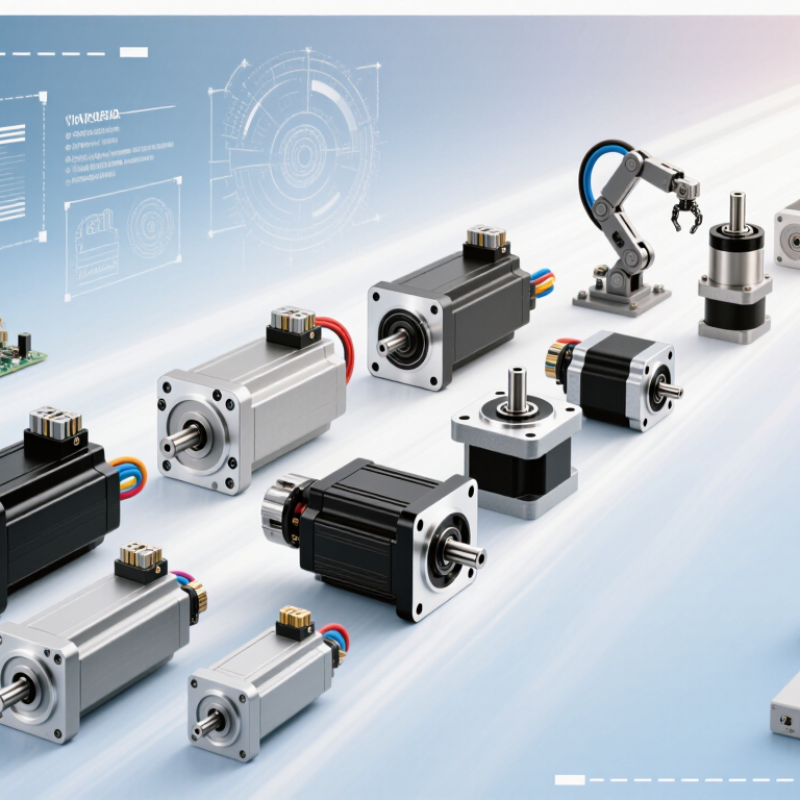
Motor choice determines how a robot starts, holds position, and responds to sudden loads. Servo motors use feedback from encoders to correct position errors, making them suitable for articulated arms and fast pick-and-place tasks. Stepper motors move in measured increments and can simplify low-speed positioning. However, missed steps may go unnoticed without feedback. Brushless DC (BLDC) motors offer smooth rotation and good efficiency, often fitting compact joints or mobile robots. Direct-drive designs connect the motor to the load without a gearbox. They reduce backlash, but require larger motors and careful thermal management. Not always.
China’s industrial robotics demand provides useful context for motor selection. The International Federation of Robotics reported 276,288 industrial robot installations in China in 2023, about 51% of global installations. That figure counts robots, not motors, so it should not be treated as a motor-market share. On a factory floor, a heavy arm may need servo feedback and substantial torque, while a small conveyor axis may favor a simpler stepper. Direct drive can help when precision matters, but its size, heat, and cost deserve scrutiny. Engineers should compare peak torque, continuous torque, speed, encoder resolution, and cooling needs under real duty cycles. A catalogue rating alone rarely tells the whole story.
For buyers comparing robotics motor manufacturers in China, torque and speed figures need to match the robot’s real workload. Continuous torque describes sustained operation; peak torque applies only for limited periods. A compact joint may need high torque at low speed, while a conveyor axis may prioritize faster rotation. Numbers need context.
Check the full torque-speed curve, not just the maximum values printed in a catalogue. Ask for test conditions, including voltage, temperature, and load. A motor producing strong startup torque may lose speed under sustained load. Efficiency also changes across the operating range. One headline percentage rarely tells the whole story. A dynamometer report at the intended operating point is more useful.
IEC 60034 covers rotating electrical machines, including rated output and thermal performance; related parts address efficiency classification. Confirm which standard and rating apply to the specific motor, and review the duty type, insulation class, and enclosure protection. These details affect heat buildup and service life inside a crowded robot joint. A certificate alone cannot replace application testing. Compare measured results with your motion profile, then check whether the supplier can explain any gaps. That conversation can reveal more than polished specifications.
In 2023, China installed 276,288 industrial robots, according to the International Federation of Robotics (IFR). The figure signals substantial demand for automation across the country’s factories. It does not mean every industry grew at the same pace, or that each installation used the same equipment. Still, this scale creates a significant market for the motors and drive systems that move robotic arms and production lines.
Robot applications place practical demands on motors. A welding arm may need steady movement near a hot work cell, while an assembly robot must position components accurately over repeated cycles. Servo motors are often used where controlled speed and precise positioning matter. Buyers also consider torque, heat management, service life, and how easily a motor integrates with the robot’s controls. Small differences matter.
For manufacturers in China, the installation figure points to opportunity, but not guaranteed success. Suppliers need dependable performance and responsive technical support, not just competitive pricing. Buyers should compare specifications under real operating conditions and ask about maintenance needs. A datasheet rarely tells the whole story. The IFR total measures installed robots, not motor shipments, so it should be treated as market context rather than a direct measure of motor demand.
China’s leading robotics motor suppliers serve different needs, from compact stepper systems to high-response servo platforms. Some focus on integrated drives, where the motor, encoder, and controller fit within one compact assembly. Others offer broader motion-control portfolios for robot axes, conveyors, and precision positioning. Buyers should compare torque curves, encoder resolution, thermal limits, and communication protocols rather than relying on catalogue power ratings alone. Check the details.
For a robot joint, a motor must handle repeated acceleration without overheating or creating excessive vibration. Ask suppliers for test conditions, duty-cycle data, and support options for commissioning. A quiet motor on a showroom bench may behave differently after hours of continuous operation. This is easy to overlook. Compare samples under the same load, mounting position, and ambient temperature, then record noise and temperature. Supplier strengths can differ by product line, so verify the exact model’s documentation and service coverage. Even a careful shortlist can miss a practical issue, such as a connector that is awkward to reach inside a narrow robot arm.
When comparing robotics motor manufacturers in China, rated torque is more useful when paired with operating conditions. Check whether the figure is continuous or peak, and ask for the permitted temperature, speed, and duty cycle. A compact motor may list impressive peak torque, yet overheat during repeated lifting. Request a torque-speed curve and test data for the intended load.
Encoder resolution needs similar care. A specification may state counts per revolution, pulses per revolution, or absolute positions; these figures are not directly interchangeable. Confirm whether the value is measured before or after quadrature decoding, and ask about accuracy, repeatability, and communication interface. For a small robot arm, backlash and control-loop performance can matter as much as headline resolution. Numbers need context.
Review quality evidence alongside performance. An ISO 9001 certificate concerns a manufacturer’s quality-management system, not the precision of every motor. Ask for inspection records, sample test reports, and details of temperature-rise and endurance testing. Check which standards apply to the motor and its intended installation; system-level compliance may require separate evaluation. Documentation can be incomplete, even from capable suppliers, so compare actual test conditions rather than relying on a certificate alone. That distinction is easy to miss.
| Motor / Supplier Profile | Typical Rated Torque | Common Encoder Resolution | Typical Robotics Applications | Quality Standards to Check | Key Comparison Points |
|---|---|---|---|---|---|
| Compact BLDC servo motor | Approximately 0.05–5 N·m, depending on frame size and cooling | Commonly 1,000–20,000 counts/revolution; confirm whether the figure is before or after quadrature decoding | Mobile robots, compact joints, grippers, and small automation axes | ISO 9001 quality-management certification; applicable GB/T or IEC 60034 motor requirements | Compare continuous torque, peak torque, thermal limits, speed range, and encoder interface |
| AC servo motor for industrial robotics | Approximately 0.16–50 N·m across common servo frame sizes | Often 17–23 bit absolute encoder resolution, or incremental encoder specifications stated in pulses/revolution | Robot joints, positioning axes, rotary tables, and high-dynamic machinery | ISO 9001; IEC 60034 requirements where applicable; request the exact test and certification scope | Check rated versus peak torque, overload duration, inertia match, brake options, and drive compatibility |
| Integrated servo motor with drive | Approximately 0.1–10 N·m for compact integrated units | Typically 17–20 bit encoder resolution; verify whether resolution refers to the encoder or the control system | AGVs, cobots, compact robot modules, and distributed motion systems | ISO 9001; applicable electrical safety and EMC requirements for the complete motor-drive assembly | Compare bus protocols, continuous torque at operating temperature, tuning tools, and protection ratings |
| Hybrid stepper motor | Approximately 0.1–10 N·m; available torque decreases as speed rises | Open-loop models have no encoder; closed-loop versions commonly use incremental encoders in the hundreds to several thousand PPR | Low-cost positioning axes, feeders, and light-duty robotic mechanisms | ISO 9001; applicable GB/T or IEC 60034 requirements; inspect product-level test reports | Compare holding torque separately from running torque, missed-step protection, noise, and speed-torque curves |
| Frameless torque motor | Approximately 1–100+ N·m, with a wide range by diameter and design | Usually paired with a separate high-resolution encoder; system resolution depends on the selected encoder and readout | Direct-drive robot joints, rotary tables, and precision positioning stages | ISO 9001; applicable IEC 60034 requirements; request winding, insulation, and thermal test data | Compare continuous torque density, cooling method, cogging, allowable temperature rise, and integration tolerances |
Note: The figures above are representative ranges for motor classes commonly offered by suppliers, not verified specifications for individual manufacturers or products. Actual torque and encoder specifications vary by model, operating speed, cooling, and measurement convention. ISO 9001 is a quality-management-system standard, not a guarantee of a particular motor’s performance; verify certificates, scope, test reports, and product datasheets directly with each supplier.
Encoders provide feedback, helping the motor correct position errors. This suits articulated arms and fast pick-and-place tasks. Feedback matters.
Steppers move in measured increments and can simplify low-speed positioning. Without feedback, missed steps may go unnoticed. Worth checking.
They offer smooth rotation and good efficiency. These traits can suit compact joints and mobile robots, depending on the load.
They connect directly to the load, reducing backlash. They may need more space, larger motors, and careful heat management. Not always.
China installed 276,288 industrial robots in 2023, about 51% of global installations. This describes robots, not motor shipments. Context, not a motor-market share.
Check continuous and peak torque, speed, temperature, and duty cycle. A motor’s peak rating may not suit repeated lifting. Ask for a torque-speed curve and test data.
Confirm the measurement method, accuracy, repeatability, and communication interface. Counts per revolution and absolute positions are not directly interchangeable. The number alone can mislead.
No. A quality-management certificate describes a system, not each motor’s precision. Review inspection records, temperature-rise tests, and endurance results. Test conditions matter.
Robotics Motors are essential to the precision, speed, and reliability of modern robotic systems. This overview explains the differences among servo, stepper, brushless DC, and direct-drive motors, including how each design suits particular motion and control requirements. It also highlights key selection factors such as rated torque, operating speed, energy efficiency, encoder resolution, and applicable IEC 60034 ratings.
China’s robotics market continues to create substantial demand: the International Federation of Robotics reported 276,288 industrial robot installations in the country in 2023. To assess potential suppliers, buyers can compare technical specifications, quality standards, product consistency, and application support rather than relying on headline performance alone. A clear understanding of these factors helps match motor capabilities to a robot’s workload and operating environment.
Zelt Motor