What Are Torque Motors and How Do They Work?

Time:2026-09-27 Author:Mason
0%

Torque Motors are built to deliver high rotational force directly at the load. Unlike conventional motors, they often remove the need for gears, belts, or mechanical transmissions. This direct-drive design can improve positioning accuracy and reduce maintenance points. It is common in robotics, industrial machinery, medical equipment, and precision manufacturing systems.

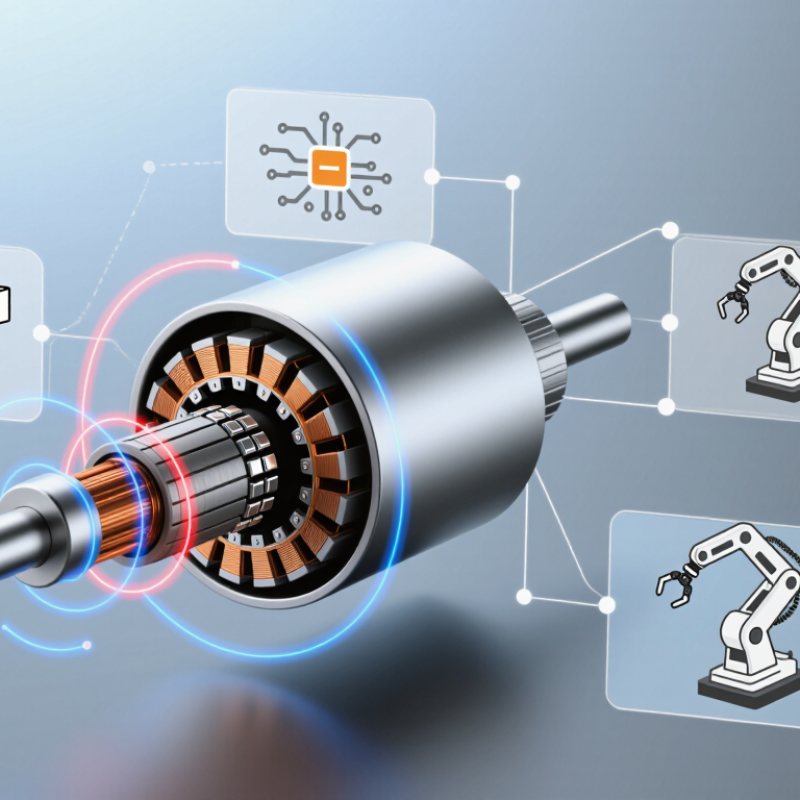
Inside a torque motor, electrical current creates a rotating magnetic field. Permanent magnets interact with this field and produce continuous turning force. The rotor moves, while the stator controls the magnetic sequence around it. Sensors or encoders report the rotor’s exact position. A drive then adjusts current, speed, and torque in real time. Picture a robotic arm moving a heavy joint smoothly, without the faint backlash of a gearbox.

Their benefits come with practical limits. Torque Motors can generate heat when they hold high force for long periods. Engineers must manage cooling, bearing loads, wiring, and control stability. Motor size also affects available torque and installation space. No motor is perfect. A direct-drive system may simplify mechanics, yet demand more careful electrical design. This guide explains how these motors work, where they perform best, and which design choices influence reliability. The discussion reflects established engineering principles and real industrial considerations, while recognizing that application results depend on load, speed, temperature, and operating conditions.
What Are Torque Motors and How Do They Work?

Torque Motors: Definition and Core Characteristics

A torque motor is a low-speed electric motor built to deliver substantial turning force directly to a load. Many are direct-drive designs, so they operate without a reduction gearbox. Inside, electrical current in the stator interacts with the rotor’s magnetic field to produce torque. Their wide, short form is practical around rotary tables, indexing equipment, and machine-tool axes. The load connects close to the motor, rather than through a long chain of gears.

Core characteristics include high torque at low speeds, smooth motion, and reduced mechanical backlash. Some models can also provide holding torque while stationary, depending on their control system and cooling. Size matters: a broad rotor can produce strong torque, but it may demand careful mounting and thermal management. Heat is easy to underestimate. The U.S. Department of Energy’s 2014 Motor Systems Market Assessment reports that motor-driven systems account for about 68% of electricity used in U.S. manufacturing. That figure describes motor systems overall, not torque motors specifically; it highlights why application-level efficiency deserves measurement rather than assumption. A torque motor’s real benefit depends on its load, duty cycle, cooling, and drive settings.

Torque Motors: Definition and Core Characteristics

A torque motor is a direct-drive motor designed to deliver high torque at low speeds, often without a gearbox. This illustrative engineering model holds torque at 100 N·m up to a 300 rpm base speed, then reduces torque as speed rises to represent approximately constant power above that point. The 100 N·m at 300 rpm operating point corresponds to about 3.14 kW; the curve is not measured data for a specific motor.

How Torque Motors Produce Direct Rotary Motion

What Are Torque Motors and How Do They Work?

How Torque Motors Produce Direct Rotary Motion

A torque motor creates rotation directly at its output shaft, without a gearbox. Inside, electrical current energizes coils in the stator, producing a magnetic field. That field interacts with permanent magnets on the rotor, generating torque around the motor’s central axis. An encoder reports the rotor’s position to a controller, which adjusts current to keep motion accurate.

Smooth, controlled turns.

Because the motor connects directly to the load, it can deliver high torque at low speed and avoid gear-related backlash. This is useful in rotary tables, indexing systems, and large-diameter joints, where precise positioning matters. But direct drive is not automatically the efficient choice. The motor must be sized for the load’s inertia, and its heat needs a path out of the assembly. A warm housing is a clue worth investigating.

The wider energy context matters, though it is not torque-motor-specific: the International Energy Agency’s 2011 report, Energy-Efficiency Policy Opportunities for Electric Motor-Driven Systems, estimated that these systems use about 45% of global electricity. That figure makes careful motor selection relevant. In practice, engineers check torque across the full speed range, then test performance under real load. A catalogue rating alone can miss the details.

Key Components Inside a Torque Motor

A torque motor is built to deliver strong rotational force at low speeds, often without a gearbox. Its stator contains copper windings fixed inside the housing. When controlled current passes through them, the windings create a rotating magnetic field. The rotor responds to that field and turns the output shaft. In many designs, permanent magnets sit on the rotor; other designs use different excitation methods. Small construction choices matter. A narrow, even air gap helps maintain smooth magnetic interaction, while uneven spacing can cause vibration or inconsistent torque.

Bearings support the shaft and keep the rotor centered as it turns. The housing holds the assembly together and helps conduct heat away from the windings. Heat is not a minor detail: sustained high current can raise winding temperature and reduce service life. Some motors include temperature sensors and an encoder. The encoder reports position or speed to a controller, which adjusts current as the load changes. A metal cutting table, for example, may need steady force during slow movement and quick corrections near a corner. Not every torque motor uses the same layout, and that can make component comparisons less straightforward than they first appear.

Torque Motor Types and Their Operating Differences

Torque motors produce high torque at low speeds, often without a gearbox. Their operating differences come from winding design, commutation, and construction. A direct-drive axis can turn a heavy table smoothly, but its motor must handle heat and load directly. That matters.

Brushed DC torque motors use brushes and a commutator to switch current as the rotor turns. Their control can be straightforward, but brush wear adds maintenance. Brushless torque motors use electronic commutation instead. A drive switches current through the windings, supporting precise control and avoiding brush replacement. The trade-off is added dependence on suitable electronics and feedback.

Construction also changes how a motor is installed and cooled. Frameless motors arrive as separate rotor and stator parts, allowing them to fit inside a machine’s own structure. Housed motors come in an assembled enclosure, which can simplify mounting but may limit available space. Some designs turn continuously; limited-angle versions move only through a defined arc, as in a positioning joint. These categories can overlap, so “frameless” describes packaging, not a separate way of producing torque. In practice, the best choice depends on speed, duty cycle, cooling, and the required motion—not torque rating alone. A rating can look generous on paper. Real heat tells more.

Applications, Benefits, and Selection Considerations

Torque motors deliver high torque at low speed, often driving a load directly without a gearbox. Their large-diameter rotor produces force around a wide air gap, making them useful for machine-tool tables, robotic joints, rotary indexing stations, and packaging equipment. Fewer transmission parts can reduce backlash and maintenance. That matters. The International Energy Agency’s 2011 report, Energy-Efficiency Policy Opportunities for Electric Motor-Driven Systems, estimated these systems use about 46% of global electricity. That figure covers motor-driven systems broadly, not torque motors alone.

Selection starts with the load, not the motor’s peak rating. Check continuous and peak torque, speed range, acceleration, load inertia, and duty cycle. A rotary table that starts and stops every few seconds may need different thermal capacity than one turning steadily. The U.S. Department of Energy’s 2014 motor-system sourcebook reports that motor systems account for about 68% of electricity use in U.S. manufacturing. Efficient sizing therefore matters, though actual savings depend on the whole machine. There is a catch. Direct-drive motors can be large, costly, and sensitive to heat. Compare cooling needs, encoder resolution, mounting space, and controller compatibility. If the load profile is uncertain, measure it before choosing; estimates can miss brief torque spikes.

FAQS

What is a torque motor?

It produces rotary motion directly at its output shaft. It usually drives the load without a gearbox.

How does a torque motor create rotation?

Current energizes coils in the stator and creates a magnetic field. The field interacts with rotor magnets, producing torque around the central axis.

What does the encoder do?

It reports the rotor’s position to a controller. The controller adjusts current to help maintain accurate motion. Small position errors matter.

Why use a direct-drive motor?

Direct connection can reduce backlash and transmission parts. It also supports high torque at low speeds. Fewer parts can mean less maintenance.

Where are torque motors commonly used?

They suit rotary tables, indexing stations, robotic joints, and packaging equipment. Picture a wide machine table making precise, repeated turns.

What should engineers check before selecting one?

Check continuous and peak torque, speed range, acceleration, load inertia, and duty cycle. A catalogue rating alone may miss short torque spikes.

What are some drawbacks of torque motors?

They can be large, costly, and sensitive to heat. Cooling, mounting space, encoder resolution, and controller compatibility all need checking. Easy to overlook.

How can engineers judge whether a motor is properly sized?

Measure the real load profile when possible, then test under operating conditions. A warm housing deserves investigation; estimates can be wrong.

Conclusion

Torque Motors are electric motors designed to deliver strong rotational force at low speeds, often with the load connected directly to the motor shaft. This direct-drive approach can reduce the need for gearboxes, belts, and other transmission parts. By controlling current in the motor’s windings, the system creates a magnetic field that interacts with the rotor and produces smooth, controlled rotation. The motor’s stator, rotor, bearings, and feedback components each contribute to its operation, efficiency, and positioning accuracy.

Different Torque Motors use distinct designs and control methods, so their speed range, torque output, precision, and cooling requirements can vary. They are used in equipment that needs steady movement, accurate positioning, or high force at low speeds. Their compact drive systems and reduced mechanical complexity can offer practical benefits, but selecting a suitable motor requires considering load, operating speed, duty cycle, available space, thermal limits, and control needs.

Mason

Mason

Mason is a seasoned marketing professional with a deep expertise in the company's offerings and a passion for driving brand awareness. With a strong background in digital marketing strategies, he has an innate ability to connect with diverse audiences and effectively communicate product benefits.......